Author: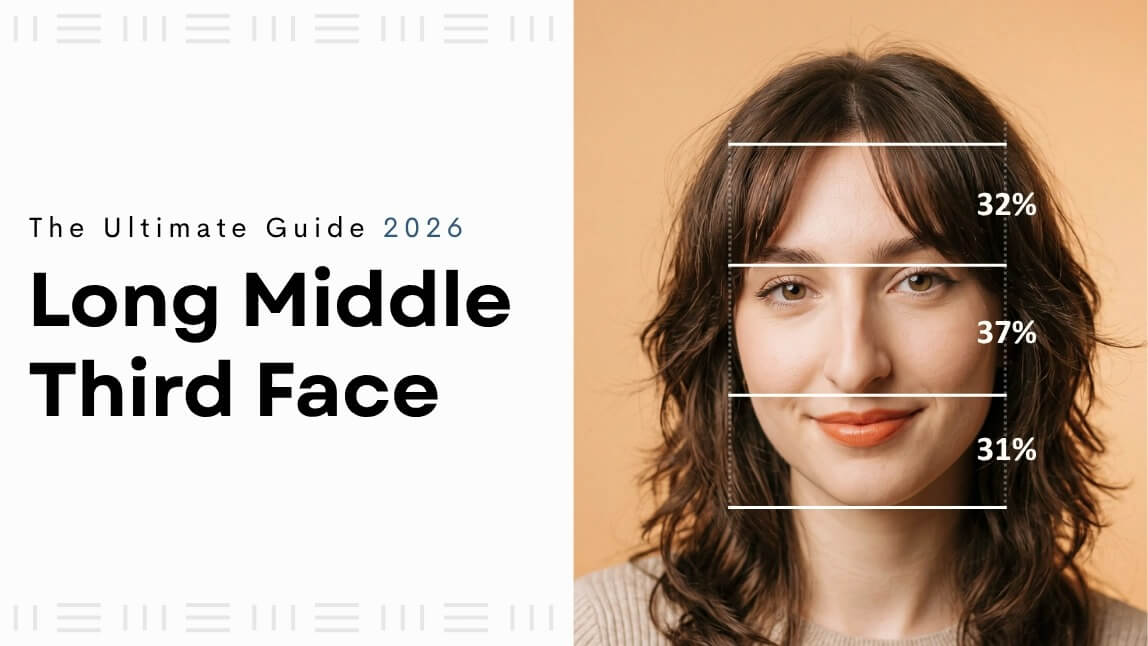
Some images in this article may be AI-generated and are provided for illustrative purposes only. They do not represent clinical results, real-person measurements, or treatment outcomes.
A long middle third face describes a face where the area from the brow line to the base of the nose appears longer relative to the upper and lower sections. For the shared method used to assess upper, middle, and lower facial proportions, see our facial thirds detector guide .
A longer-looking middle third is a visible proportion, not a flaw or a diagnosis. This guide focuses on non-surgical ways to explore different visual effects through hair, makeup, eyewear, and photography.
What Does a Long Middle Third Mean?
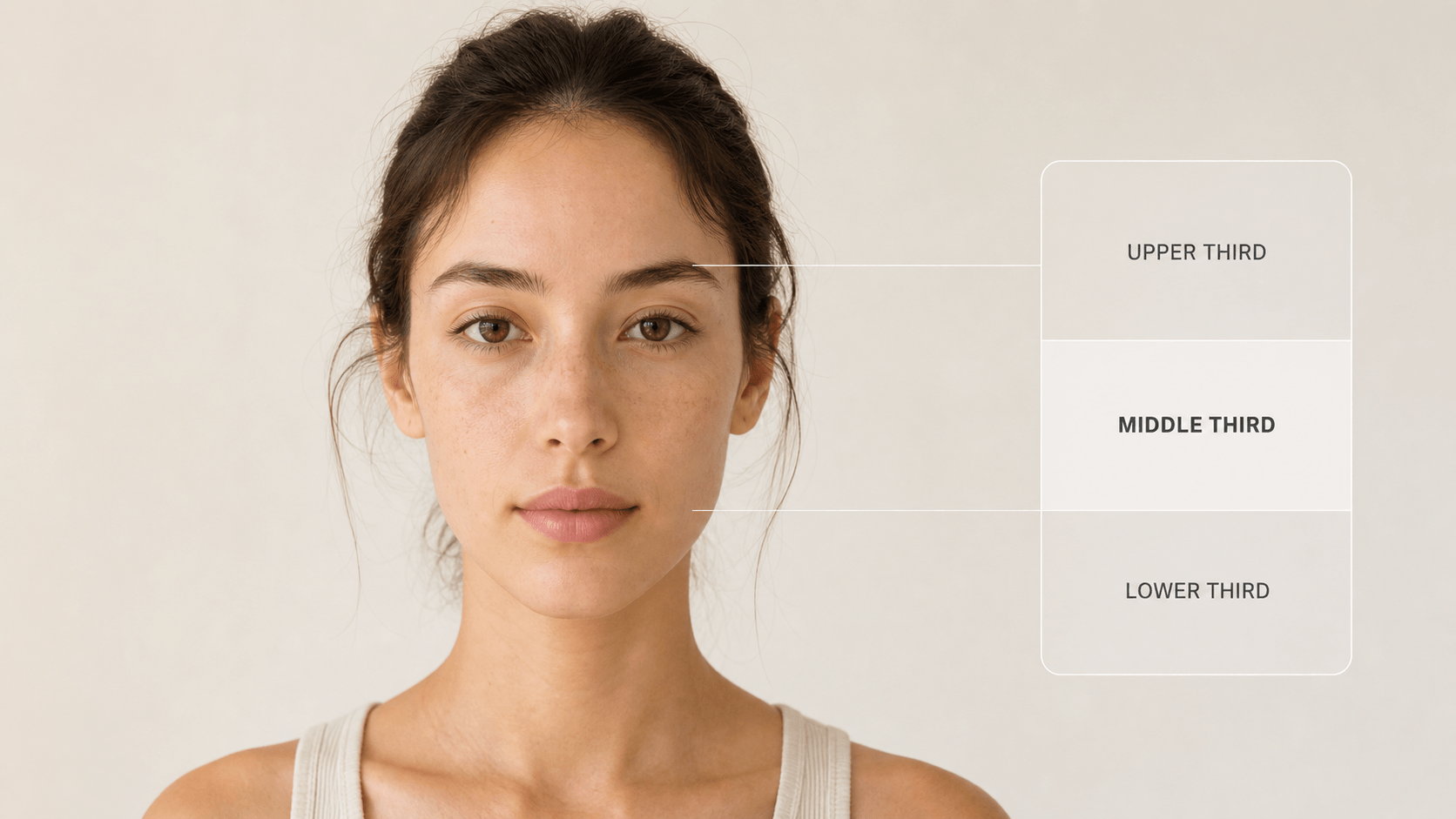
A long middle third and a long face are not the same measurement. A long middle third refers to one vertical section of the face, while a long face describes the overall relationship between face height and width. The middle third may also appear more prominent when the lower third is shorter by comparison.
For more detail on lower-face proportions, explore the chin-to-philtrum ratio and the philtrum length guide .
What Can Influence How the Middle Third Appears?
Facial proportions are shaped by individual anatomy and natural variation. In photos and daily life, the middle third can also appear different depending on lighting, camera distance, head angle, hairstyle, brow shape, cheek volume, eyewear, and makeup placement.
This is why one image or ratio should not be treated as a fixed conclusion. If you are using photo-based analysis, compare images taken in similar lighting and at a similar angle. For a separate measurement that compares midface height and width, see our midface ratio guide .
Style Ideas for a Long Middle Third
If you want to create more horizontal emphasis around the center of the face, style choices can offer a low-commitment way to experiment. There is no single right approach—use these ideas as starting points and adapt them to your hair texture, routine, fit preferences, and personal style.
Hair and Fringe
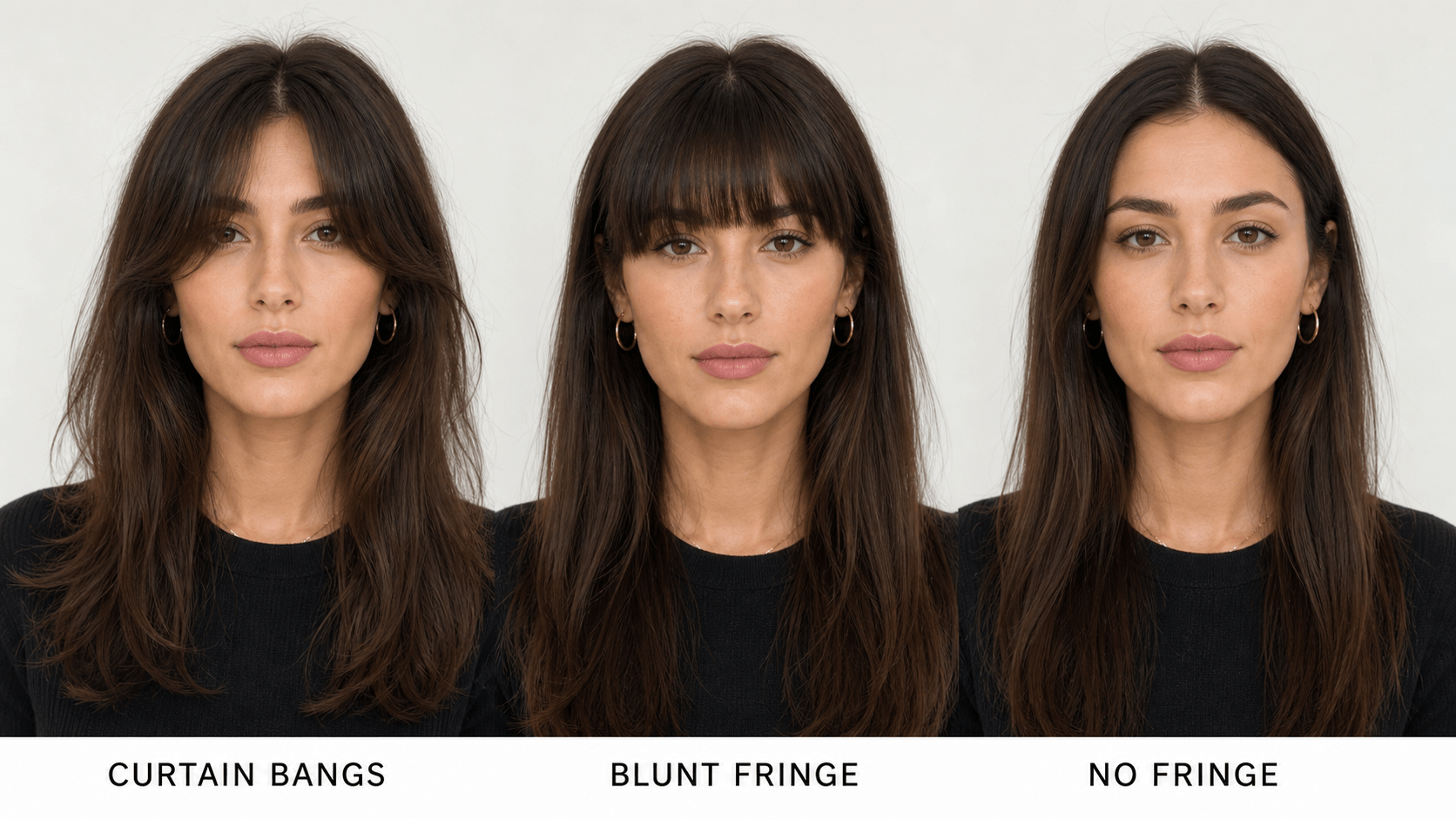
- Fringe: Curtain bangs, wispy fringe, or a fuller fringe can add framing around the forehead and cheek area.
- Side volume: Waves, curls, and layers can add movement around the cheeks and temples.
- Parting: A side part or soft, less-defined center part can create a different effect from long, flat hair with a sharp center part.
- Length: Chin-length and collarbone-length cuts can introduce visual emphasis around the lower face and neckline.
Makeup
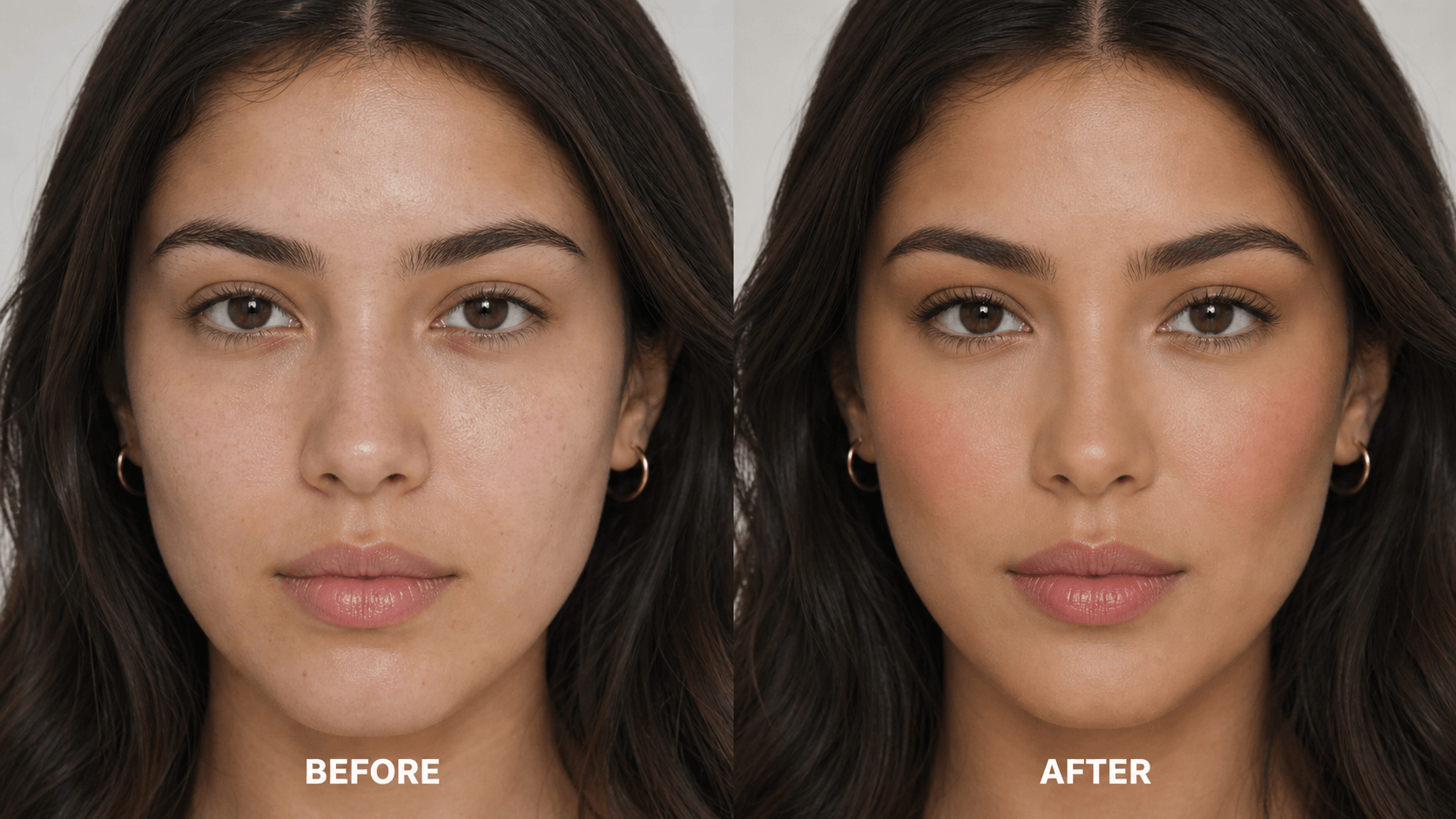
- Blush: Blending blush outward across the cheeks can emphasize horizontal movement.
- Highlight: A focused sweep across the high points of the cheeks can bring attention to cheekbone structure.
- Brows: A softer or more extended brow shape can change the visual framing above the eyes.
- Lips: Lip color or definition can shift emphasis toward the lower portion of the face.
Virtual makeup try-on can help users compare shades, placement, and complete looks before purchasing or committing to a routine.
Eyewear
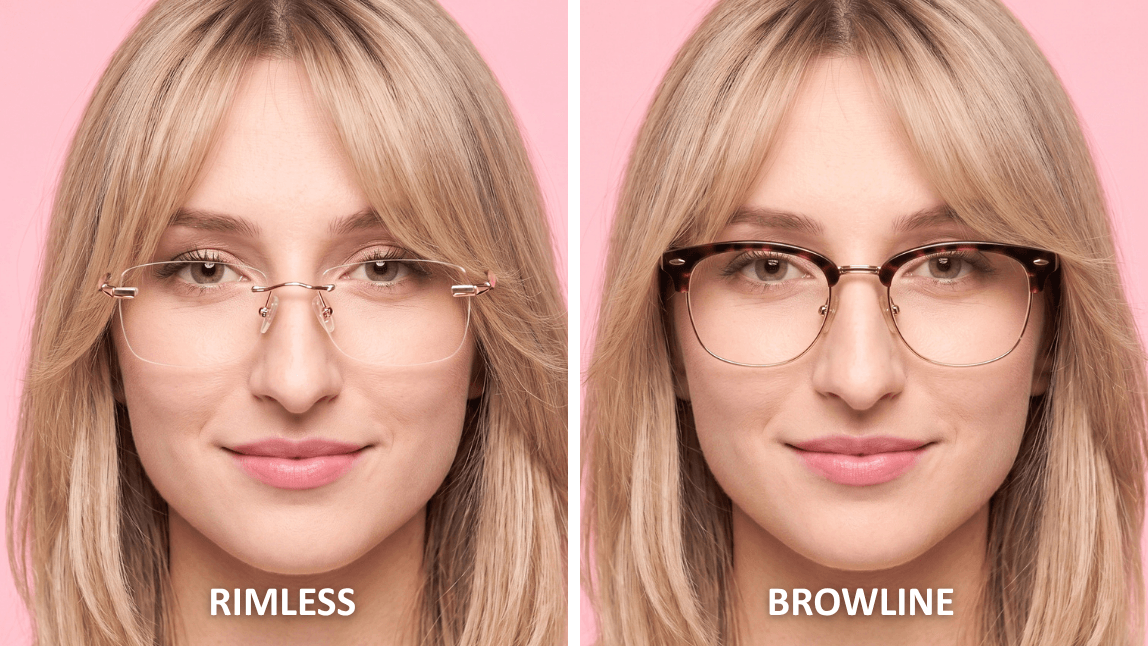
Eyewear sits across the middle third, so frame width, lens depth, browline detail, and color can noticeably change the overall look. Compare styles for comfort and fit first, then explore how different shapes complement your preferred aesthetic.
Photography
Camera distance and angle can change perceived proportions. For more consistent images, position the camera near eye level, use even lighting, and avoid extreme close-up selfies. If you are comparing photos over time, use similar framing and conditions for each image.
How AI Can Support Style Exploration
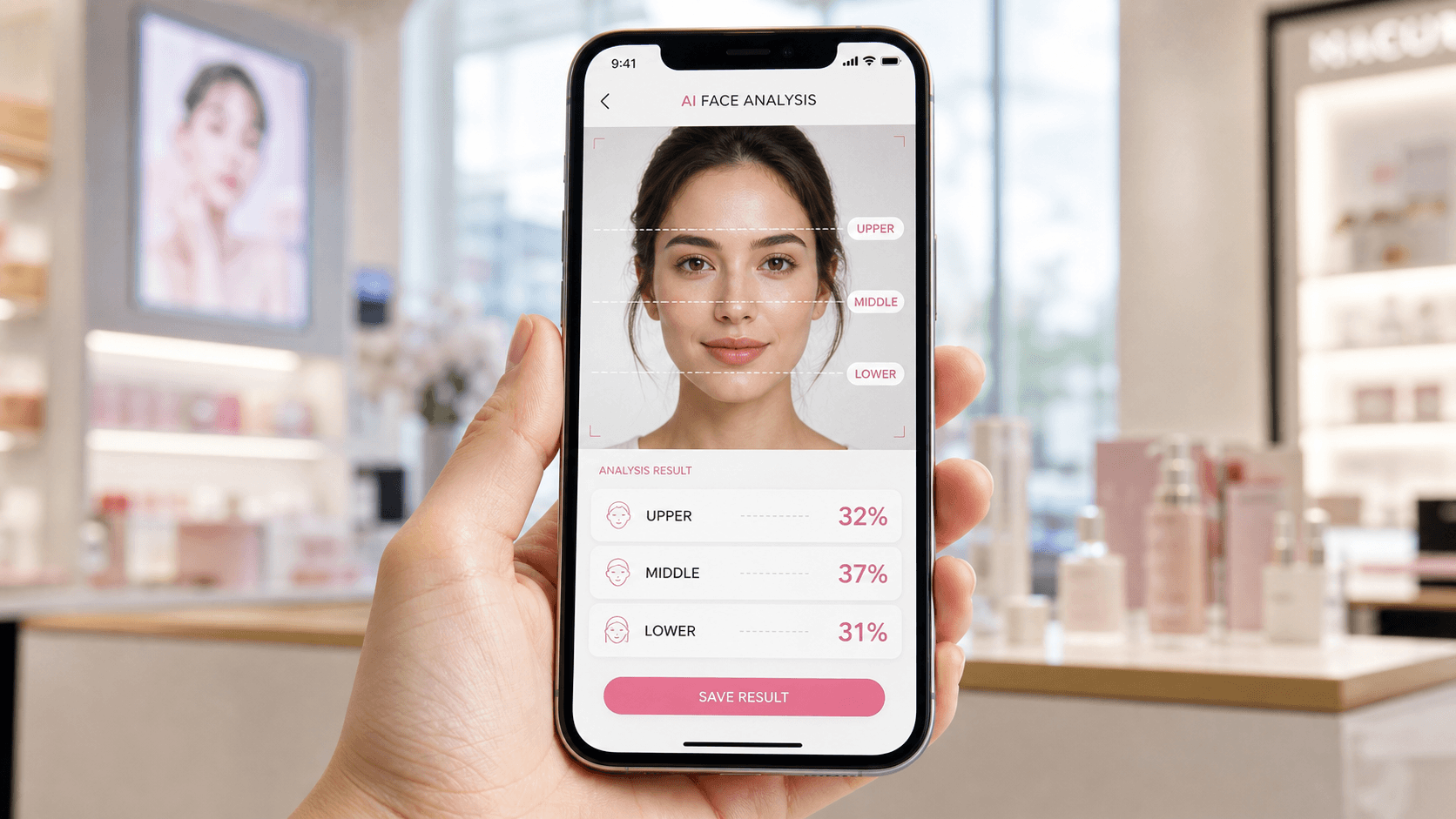
A photo-based AI tool can assess visible facial proportions and feature relationships from a customer-provided image. It can provide a structured visual reference for exploring hairstyles, makeup, eyewear, or other style options.
The result should be treated as guidance, not a beauty score or clinical conclusion. Image quality, hairline visibility, camera angle, lighting, and expression can affect a photo-based assessment.
For Beauty and Eyewear Businesses
Beauty, hair, eyewear, and accessory businesses can use optional proportion insights to create more relevant discovery experiences. A customer might explore a makeup look, hairstyle, or frame selection through virtual try-on, with visible facial attributes serving as one input alongside stated preferences.
Clear photo-use information, non-judgmental language, customer choice, and appropriate human oversight are essential. The purpose is to make product exploration and consultations easier, not to define how someone should look. Get in touch with Perfect Corp's sales team to inquire for AI solutions.
Frequently Asked Questions
What Is a Long Middle Third of the Face?
It refers to the area from the brow line to the base of the nose appearing longer relative to the upper and lower sections of the face. It is a descriptive proportion, not a diagnosis or measure of attractiveness.
Is a Long Middle Third the Same as a Long Face?
No. A long middle third describes one vertical section of the face. A long face describes the overall relationship between face height and width. A person may have one, both, or neither.
Can I Change How a Long Middle Third Appears Without Surgery?
You can explore different visual effects through hairstyles, fringe, makeup placement, eyebrow shape, eyewear, and photography. These options do not change underlying anatomy, but they can change the way features are framed and emphasized.
Do Bangs Help Frame a Longer-Looking Middle Third?
Fringe and curtain bangs can add framing around the forehead and cheek area. The effect depends on the cut, hair texture, maintenance routine, and the look you prefer, so virtual try-on or a stylist consultation can be useful.
Can AI Measure the Middle Third of the Face?
A photo-based AI tool can assess visible facial proportions from a customer-provided image. Results can vary with photo conditions, image quality, expression, and the system’s measurement method, so use them as a reference rather than a fixed conclusion.
Can a Long Middle Third Diagnose a Health Condition?
No. A visible facial proportion or an image-based result is not a medical diagnosis. Speak with an appropriately qualified healthcare professional about health, dental, or treatment-related concerns.