Author: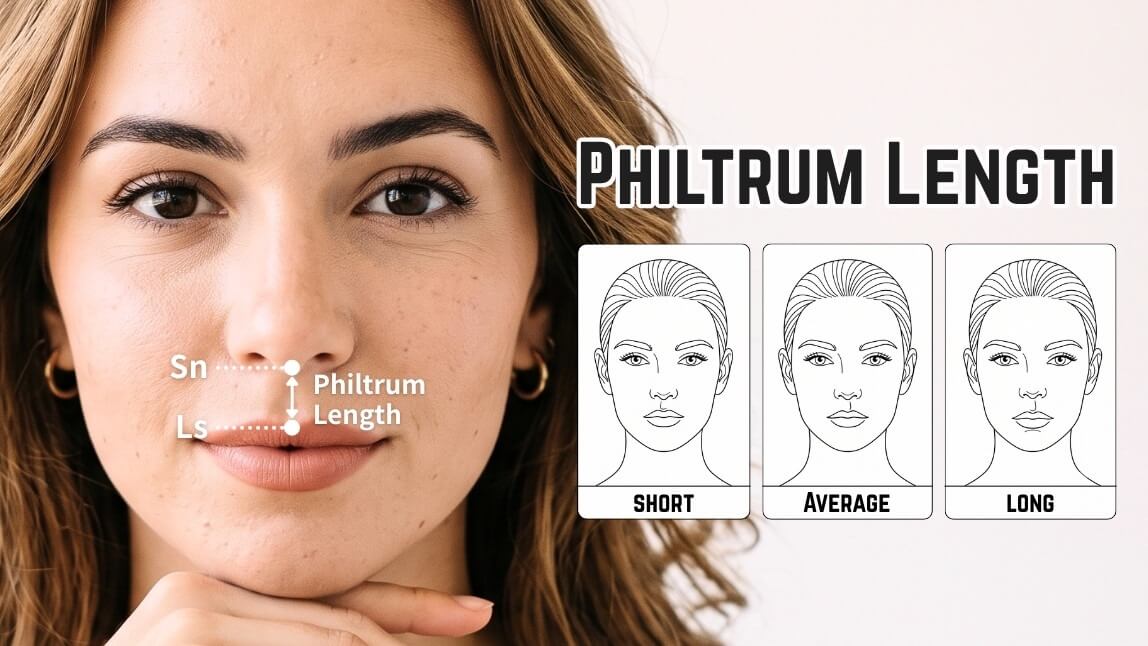
Some images in this article may be AI-generated and are provided for illustrative purposes only. They do not represent clinical results, real-person measurements, or treatment outcomes.
Average philtrum length is often cited at roughly 11–13 mm for women and 13–15 mm for men, measured from the base of the nose to the upper lip. Values vary by study population, age, and the landmarks used, so treat these figures as broad clinical references rather than personal targets.
Philtrum length is one measurement within the lower third of the face. For the shared framework for upper, middle, and lower facial proportions, see our facial thirds detector guide .
What Is Philtrum Length?
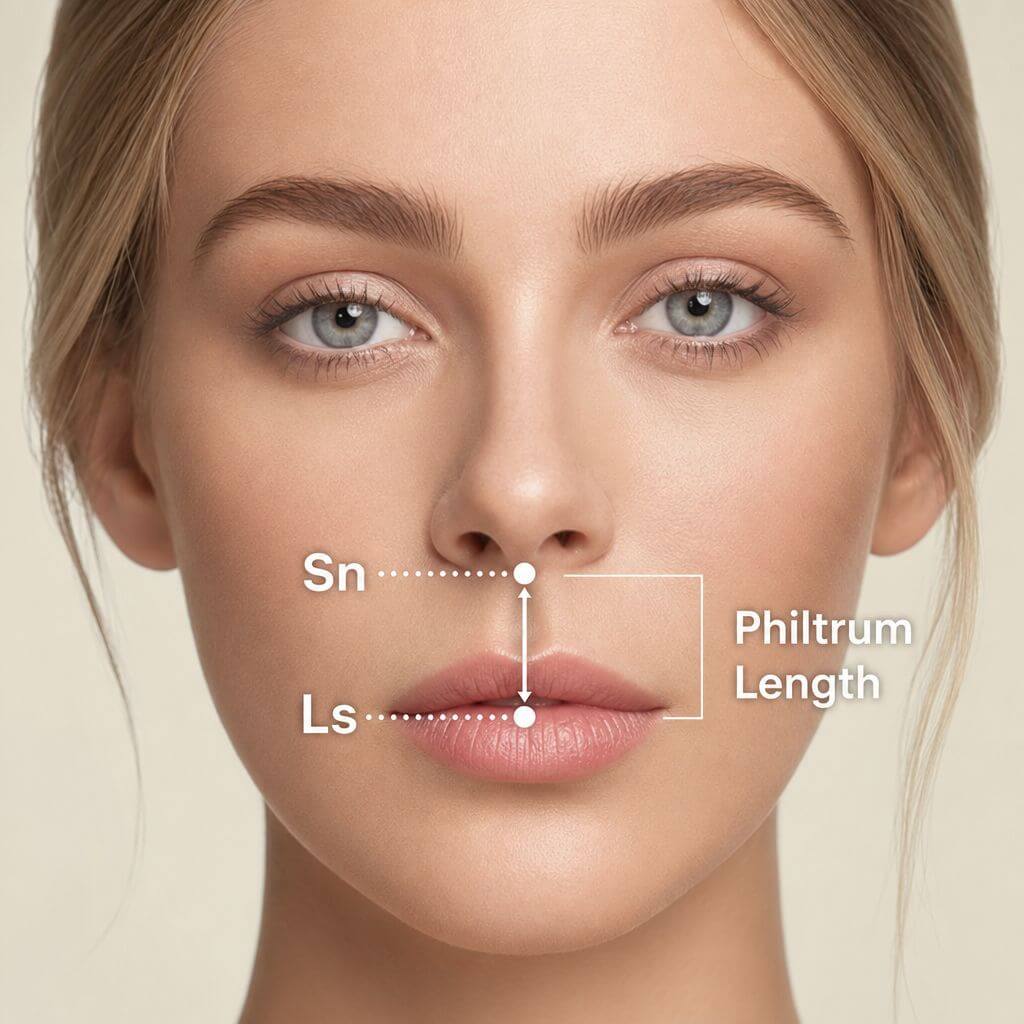
The philtrum is the vertical groove between the base of the nose and the upper lip. Clinically, philtrum length is typically measured from subnasale, where the base of the nose meets the upper-lip area, to labrale superius, the midpoint of the upper lip.
This measurement is used in facial-proportion discussions, orthodontic assessment, and appearance-focused consultations. On its own, it is descriptive—it does not determine facial harmony, attractiveness, health, or whether someone needs treatment.
What Is the Average Philtrum Length?
Published averages differ because studies may use different landmarks and sample different populations. Broad references often place adult women around 11–13 mm and adult men around 13–15 mm for the base-of-nose-to-upper-lip measurement, while other methods can produce different values.

Individual anatomy, ancestry, age, lip shape, and the position used for measurement all influence the result. A single average cannot define what is normal, desirable, or appropriate for an individual face.
Why Philtrum Length Can Change With Age
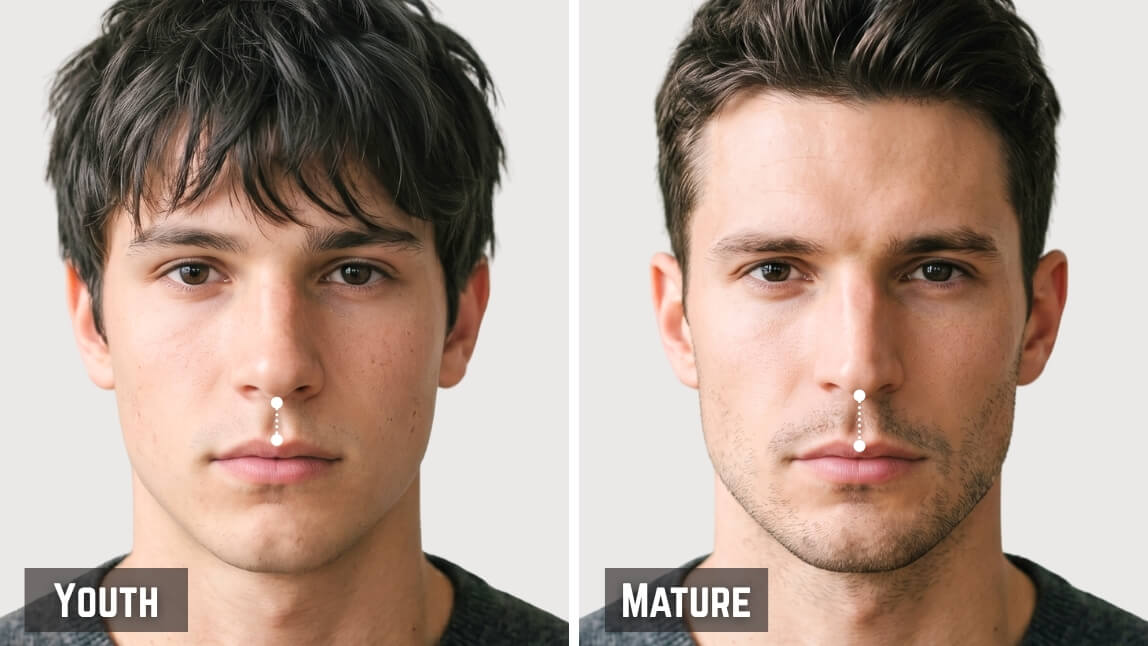
The appearance of the upper lip and philtrum can change over time as facial soft tissues and lip volume change. These changes may make the area appear longer or more defined, but the experience varies substantially from person to person.
If you have a health, dental, or treatment-related concern, speak with an appropriately qualified professional. A measurement from a photo is not a diagnosis and should not be used to self-assess a medical condition.
How Is Philtrum Length Measured?
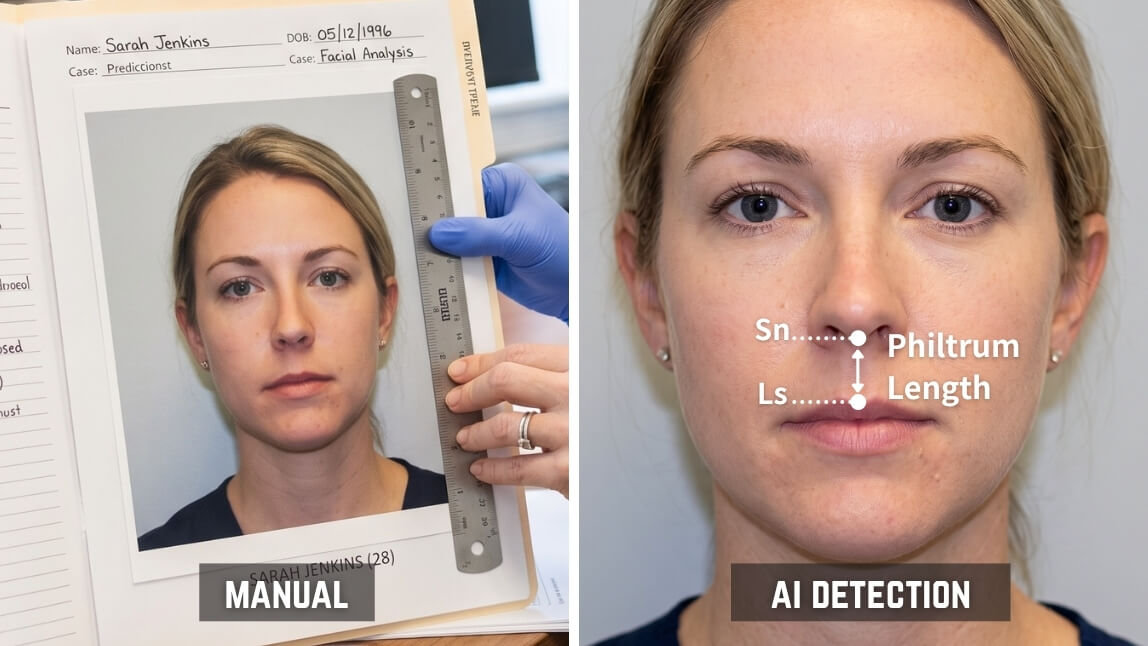
A clinician may measure philtrum length directly or from a standardized frontal photo. For a simple at-home reference, use a clear, front-facing image with even lighting, a relaxed expression, and lips gently together, then compare the distance from the base of the nose to the upper lip.
A photo-based AI tool can offer another way to assess visible facial proportions from a customer-provided image. It can be useful for visual exploration, but results may vary with camera angle, lighting, expression, image quality, and the tool’s measurement method.
How Philtrum Length Fits Within Facial Proportions
Philtrum length is one component of lower-face proportion analysis. Looking at it alongside related measurements can provide more context than considering it alone.
- Facial thirds divide the face into upper, middle, and lower vertical sections.
- Chin-to-philtrum ratio compares philtrum height with the chin segment below the upper lip.
Together, these references can support clearer discussions about visible proportions. They should not be used as a universal beauty standard or a substitute for qualified advice.
For Beauty and Aesthetic Businesses
Beauty, skincare, and aesthetic-service businesses can use optional facial-proportion insights to support product discovery, virtual try-on, and consultation conversations. The most useful experiences explain what is being assessed, give customers a clear choice about photo use, and present results as visual context—not a beauty score, diagnosis, or treatment recommendation.
Contact Perfect Corp.’s team to discuss facial analysis and virtual try-on experiences for your customer journey.
Frequently Asked Questions
What Is a Normal Philtrum Length?
Broad clinical references often cite approximately 11–13 mm for adult women and 13–15 mm for adult men, measured from the base of the nose to the upper lip. Results differ by measurement method, age, individual anatomy, and study population.
Does Philtrum Length Change With Age?
The appearance of the philtrum and upper lip can change over time as soft tissue and lip volume change. The extent and timing of those changes vary by individual.
Is Philtrum Length the Same as the Chin-to-Philtrum Ratio?
No. Philtrum length measures the distance from the base of the nose to the upper lip. The chin-to-philtrum ratio compares that measurement with the chin segment below the upper lip.
Can AI Measure Philtrum Length?
A photo-based AI tool can assess visible facial reference areas from a customer-provided image. Results depend on the image, lighting, camera angle, expression, and the measurement approach used by the tool, so they should be treated as a visual reference.
Can Philtrum Length Diagnose a Medical Condition?
No. A photo-based measurement cannot diagnose a medical or developmental condition. Speak with an appropriately qualified healthcare professional about health-related concerns.