 Author:
Some images in this article may be AI-generated and are used for illustrative purposes only.
The chin-to-philtrum ratio compares the height of the chin with the distance between the base of the nose and upper lip, offering a closer look at proportions within the lower third of the face. For the shared upper, middle, and lower-face framework, see our facial thirds detector guide .
What Is the Chin-to-Philtrum Ratio?
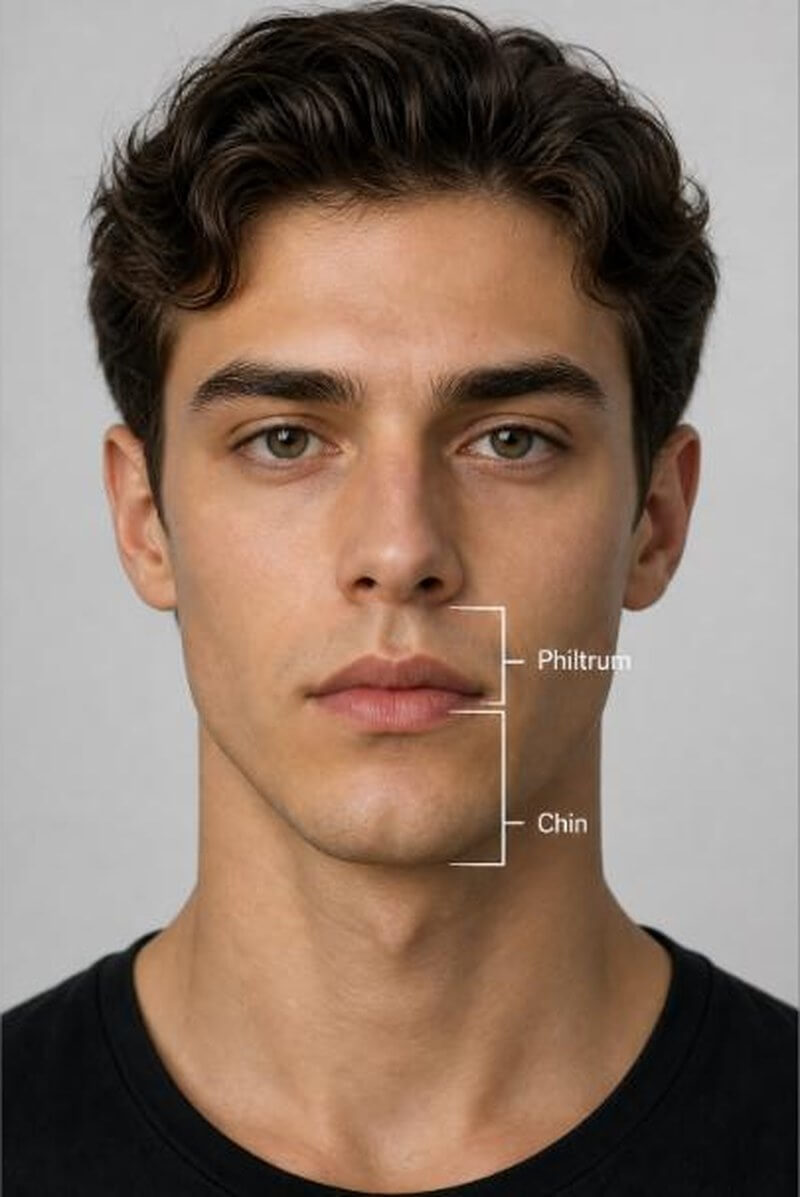
The philtrum is the vertical area between the base of the nose and the upper lip. The chin segment runs from the upper lip to the bottom of the chin. Dividing chin height by philtrum height produces the ratio.
- Philtrum: The distance from the base of the nose to the upper lip.
- Chin segment: The distance from the upper lip to the bottom of the chin.
- Ratio: Chin-segment height divided by philtrum height.
A higher value means the chin segment is longer relative to the philtrum. A lower value means the philtrum is longer relative to the chin segment. These measurements describe visible proportions; they do not determine attractiveness, health, or a need for treatment.
How to Measure the Chin-to-Philtrum Ratio
You can estimate the ratio from a clear, front-facing photo. Use even lighting, a neutral expression, and keep the camera level with your face to make the reference points easier to see.
- Mark the base of the nose, the center of the upper lip, and the bottom of the chin.
- Measure from the base of the nose to the upper lip to find philtrum height.
- Measure from the upper lip to the bottom of the chin to find chin-segment height.
- Divide the chin-segment measurement by the philtrum measurement.

A photo-based AI facial-analysis tool can provide another way to assess the same visible reference areas from a customer-provided image. This may be more convenient than drawing measurement lines manually, but results remain dependent on image quality, camera angle, expression, and how the tool defines each reference point.
How to Interpret the Result
Online discussions often present one “ideal” chin-to-philtrum ratio. That is too simplistic. Facial proportions vary naturally by individual features, age, ancestry, and the way measurements are taken. The ratio is most useful as one descriptive reference within a broader view of facial proportions.
Consider the surrounding features as well. Chin projection, jaw shape, lip volume, facial expression, camera perspective, and photo framing can influence how the lower face appears. A number by itself cannot describe facial harmony or predict how someone will be perceived.
What Can Affect the Ratio?
The underlying proportions are influenced by natural growth and individual anatomy. Their appearance in a photo can also change with age-related soft-tissue changes, lip position, facial expression, camera angle, lighting, and styling choices.
If you have a health, dental, or treatment-related question, speak with an appropriately qualified clinician. A facial ratio from a photograph is not a diagnosis and should not be used to self-assess a medical condition or decide on a procedure.
Explore Related Facial Proportions
The chin-to-philtrum ratio is one measurement within a larger facial-proportion framework. Explore the related guides below for more context:
- Facial thirds detector explains the upper, middle, and lower vertical sections of the face.
- Philtrum length covers the nose-to-upper-lip measurement on its own.
- Long middle third face examines the section between the brow line and the base of the nose.
Looking at related measurements can add context, but none should be treated as a universal standard of beauty or as a substitute for professional guidance.
How Businesses Can Use Facial Ratio Analysis

Beauty, skincare, and aesthetic-service businesses can use optional facial-proportion insights to support product discovery, client education, and consultation conversations. For example, brands may connect visible attribute analysis to makeup exploration, virtual try-on, or a structured discussion about a customer’s stated goals.
The technology should present proportions as clear visual context, not as an attractiveness score, a diagnosis, or a treatment recommendation. Businesses should provide transparent photo use information, meaningful customer choice, and appropriate professional oversight where relevant.
To explore broader facial-proportion analysis, see Perfect Corp.’s AI facial ratio tools .
Frequently Asked Questions
What Is the Chin-to-Philtrum Ratio?
It is a lower-face proportion that compares chin height with philtrum height. The ratio is calculated by dividing the chin-segment measurement by the philtrum measurement.
How Do You Calculate the Chin-to-Philtrum Ratio?
Measure from the upper lip to the bottom of the chin, then divide that distance by the distance from the base of the nose to the upper lip. A clear, front-facing image helps make the reference points easier to compare.
What Is a Good Chin-to-Philtrum Ratio?
There is no single ratio that defines a good, ideal, or attractive lower face. Published references and online frameworks vary, and facial proportions should be interpreted alongside the person’s other visible features, preferences, and context.
Can AI Measure the Chin-to-Philtrum Ratio?
A photo-based AI tool can assess visible reference areas from a customer-provided image and calculate facial proportions. Results may vary with camera angle, lighting, facial expression, image quality, and the model’s measurement method.
Is the Chin-to-Philtrum Ratio the Same as Philtrum Length?
No. Philtrum length measures only the distance from the base of the nose to the upper lip. The chin-to-philtrum ratio compares that distance with the chin segment below the upper lip.
Can a Facial Ratio Diagnose a Medical Condition?
No. A facial ratio from a photo is not a medical diagnosis and should not be used to self-assess a health condition or determine whether a treatment is appropriate.