Author: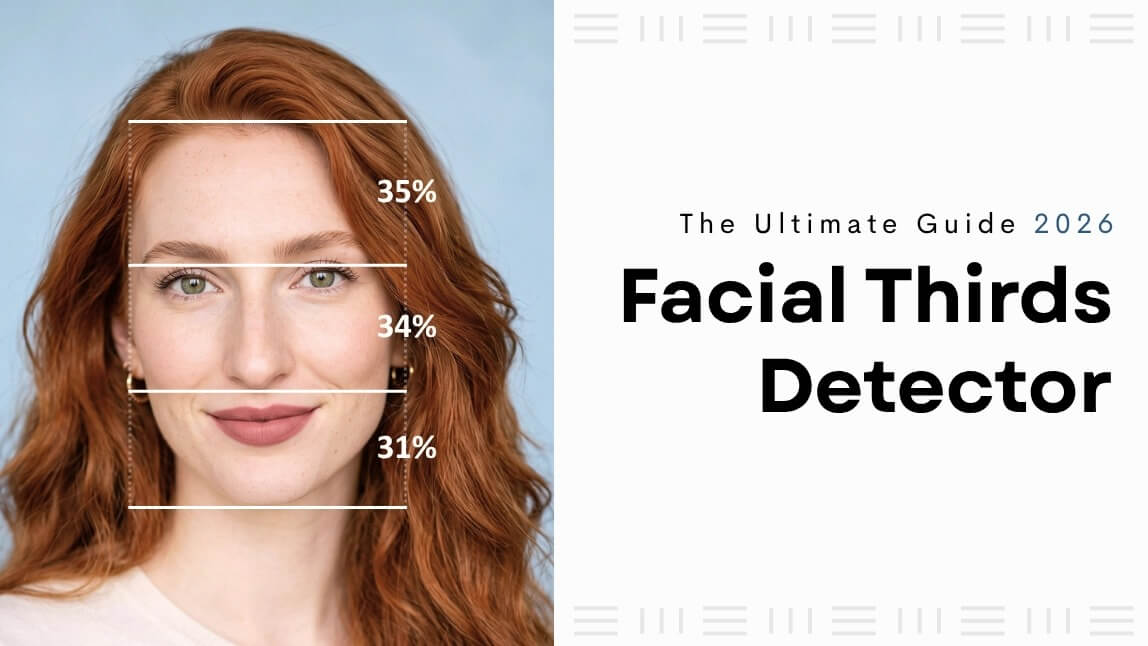
Some images in this article may be AI-generated and are used for illustrative purposes only.
A facial thirds detector assesses three vertical sections of the face from a photo: the upper third, middle third, and lower third. The result can help describe visible facial proportions and provide a starting point for beauty, styling, or consultation discussions.
Facial thirds are not a beauty score or a diagnosis. The classical 1:1:1 model is a long-used proportion reference, not a universal standard that every face should match.
What Are Facial Thirds?
Facial thirds divide the face into three horizontal bands using four reference points:
- Upper third: From the hairline to the brow line.
- Middle third: From the brow line to the base of the nose.
- Lower third: From the base of the nose to the bottom of the chin.
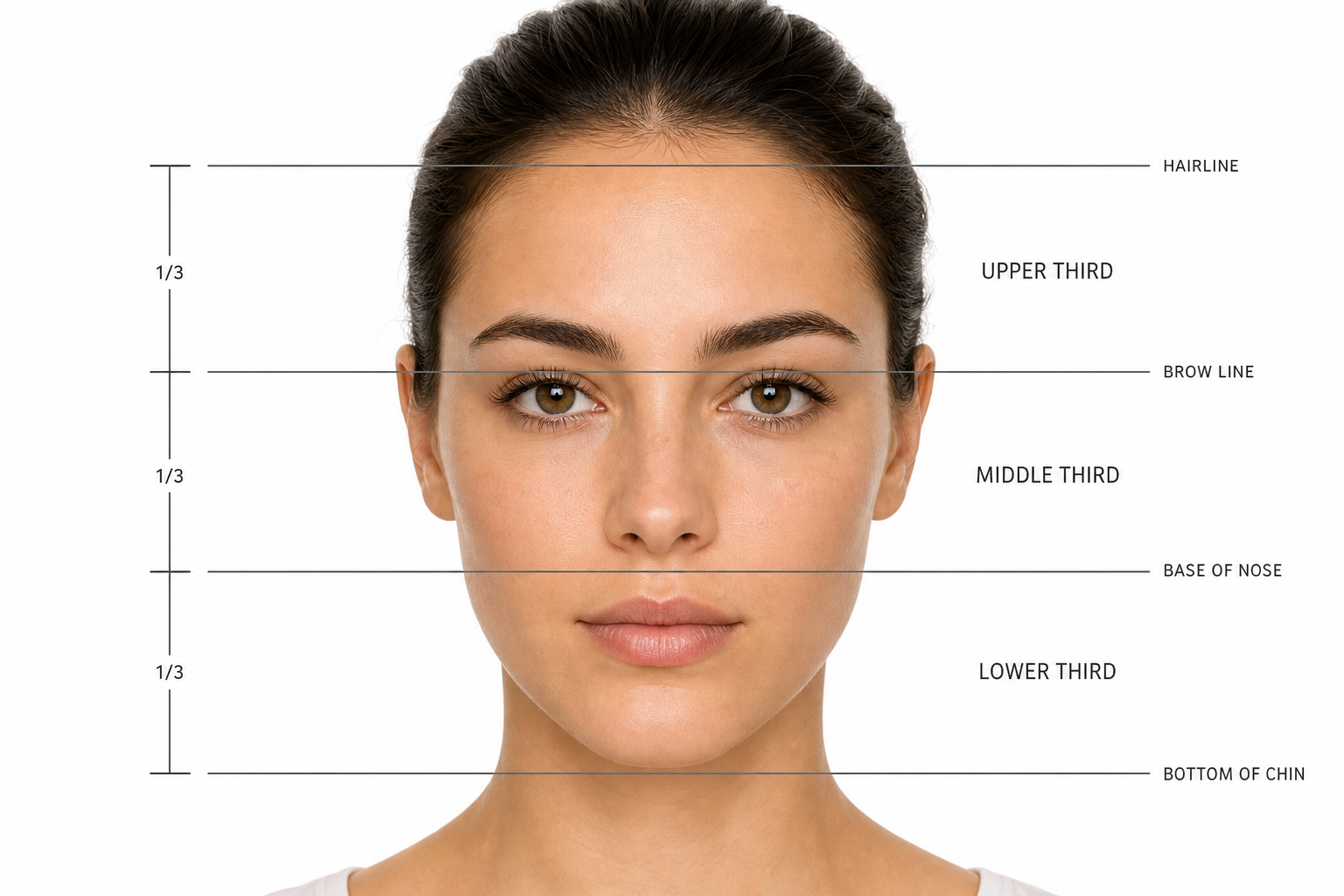
In classical art and facial-proportion teaching, these three bands are often shown as approximately equal. Real faces vary naturally, and the value of the framework is descriptive: it gives people and professionals a consistent way to discuss proportion rather than defining an ideal appearance.
How to Measure Facial Thirds
You can estimate facial thirds manually from a clear, front-facing photo or use a photo-based AI tool. Both methods compare the same broad reference areas, although photo quality and natural variation can affect any image-based result.
Manual Measurement
- Use a clear, front-facing image with even lighting and a neutral expression.
- Mark the hairline, brow line, base of the nose, and bottom of the chin.
- Measure the three vertical distances between those points.
- Compare each measurement with the total face height to see how the three sections relate.
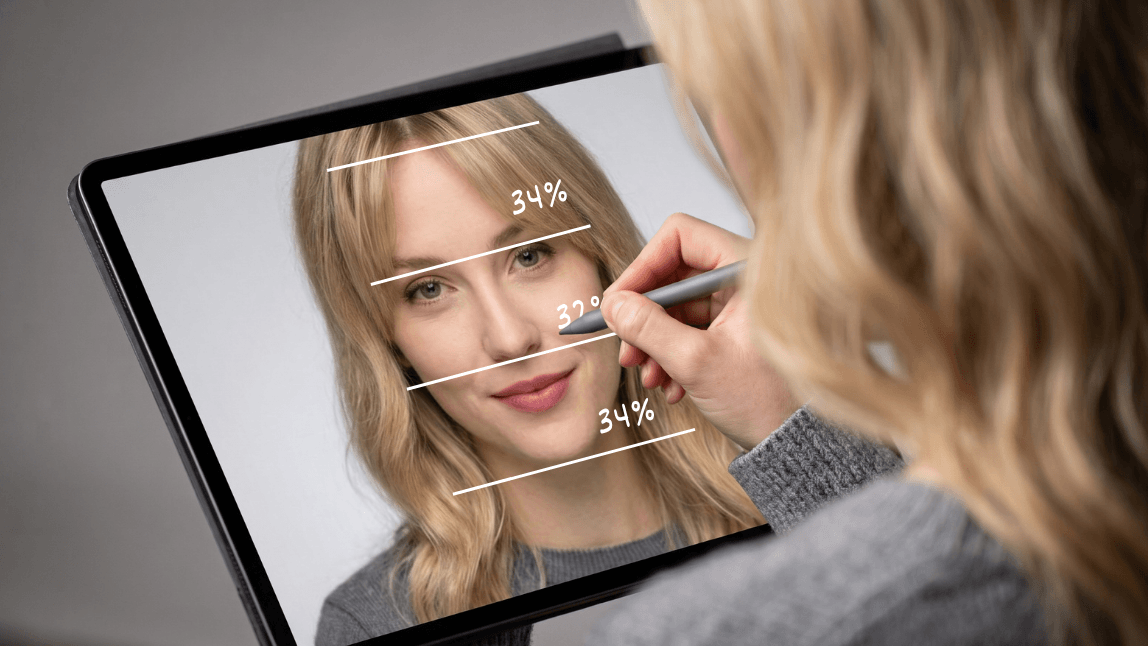
Photo-Based AI Analysis
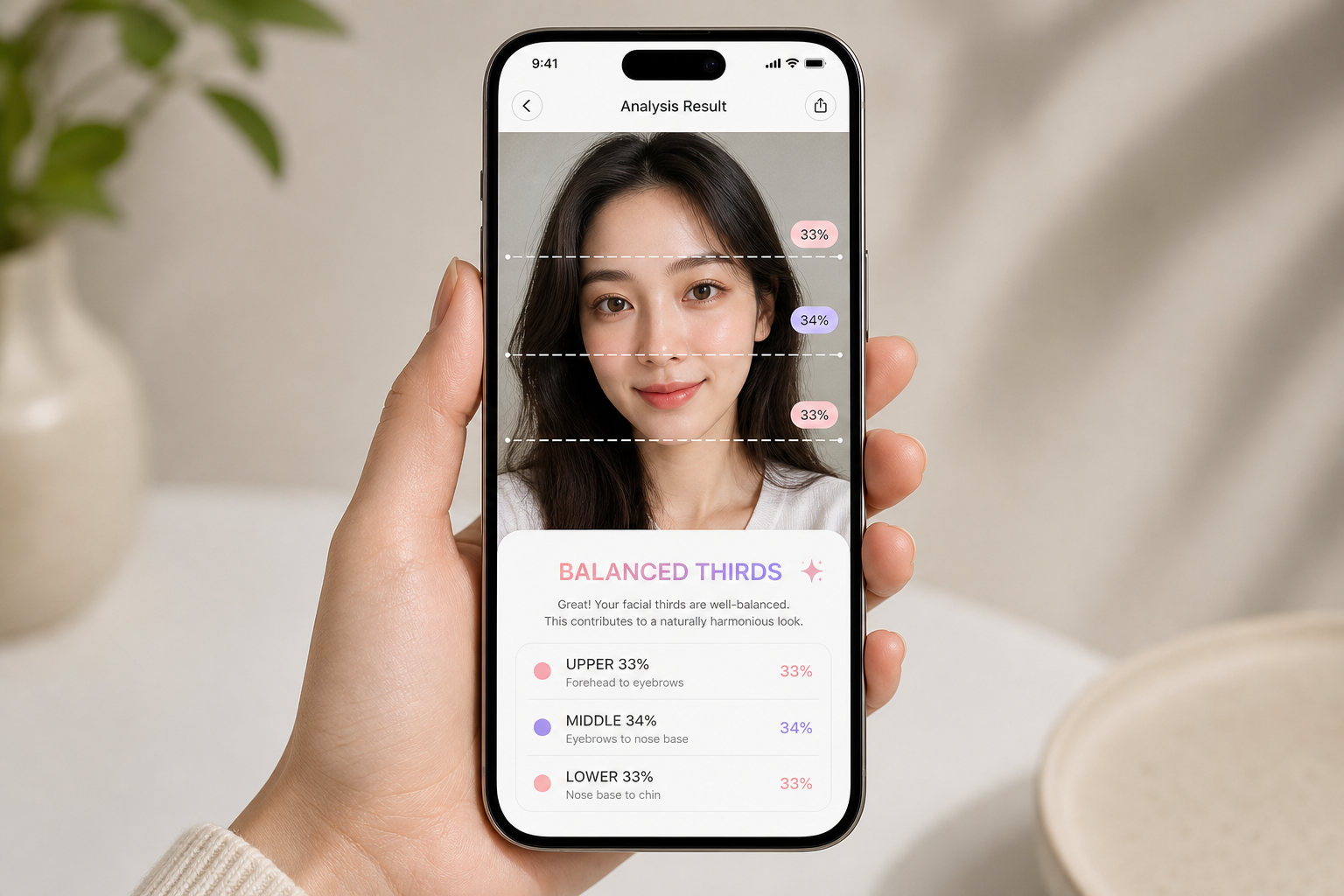
An AI facial thirds detector assesses visible facial proportions and feature relationships from a customer-provided image, then returns a structured view of the three sections. This can offer a more convenient starting point than manually placing measurement lines on a photo.
For a useful result, use a level, front-facing image with even lighting and keep hair away from the forehead and jawline where possible. Results should be treated as guidance: camera angle, expression, hairline visibility, and image quality can influence an assessment.
AI vs. Classical 1:1:1: What the Results Mean
The 1:1:1 model is a classical reference in which the upper, middle, and lower thirds appear similar in height. It is useful for understanding the framework, but it should not be treated as a universal beauty standard or a target for an individual face.
AI can make the comparison easier by presenting visible proportions consistently from a photo. It cannot determine attractiveness, diagnose a health condition, predict a treatment outcome, or replace professional judgment. A result is most useful when it supports a conversation about styling, product exploration, or an informed professional consultation.
Explore Related Facial Proportions
Facial thirds provide a high-level view of vertical facial proportions. The following guides examine specific areas within that framework:
- Long middle third face explains the middle section between the brow line and base of the nose.
- Philtrum length focuses on the distance from the base of the nose to the upper lip.
- Chin-to-philtrum ratio compares two measurements within the lower third of the face.
Together, these measurements offer a more detailed view than any single ratio. They should still be interpreted in context, with individual features, preferences, and professional guidance where appropriate.
How Businesses Can Use Facial Proportion Analysis

Beauty, eyewear, hair, and aesthetic-service businesses can use facial-proportion insights to support optional, personalized discovery. For example, a brand may connect visible proportion data to makeup placement education, hairstyle exploration, eyewear try-on, or an assisted consultation.
The strongest experiences explain what is being assessed, obtain clear consent for photo use, and present results as visual context rather than a judgment or prescribed outcome. Businesses can explore Perfect Corp.’s AI Facial Thirds Calculator to see how facial-proportion insights can be incorporated into a customer journey.
Frequently Asked Questions
What Are Facial Thirds?
Facial thirds are the upper, middle, and lower vertical sections of the face. They are commonly measured from the hairline to the brow line, from the brow line to the base of the nose, and from the base of the nose to the bottom of the chin.
Are Facial Thirds Supposed to Be Equal?
Not necessarily. Equal thirds are a classical proportion reference, but real faces vary naturally. Small or larger differences between the three sections are common and are not a measure of attractiveness or health.
How Can I Measure Facial Thirds at Home?
Take a clear, front-facing photo with even lighting, mark the hairline, brow line, base of the nose, and bottom of the chin, then compare the three vertical distances. A photo-based AI tool can offer another way to explore the same visible proportions.
What Is the Difference Between Facial Thirds and Philtrum Length?
Facial thirds measure three broad vertical sections of the whole face. Philtrum length measures a smaller segment within the lower third: the distance between the base of the nose and the upper lip.
What Is the Chin-to-Philtrum Ratio?
The chin-to-philtrum ratio compares the chin segment with the philtrum segment within the lower third of the face. It provides a more detailed view of lower-face proportions than facial thirds alone.
Can AI Facial Analysis Diagnose a Medical Condition?
No. Image-based facial-proportion analysis should not be used as a medical diagnosis or a substitute for a clinical assessment. Speak with an appropriately qualified professional about medical or treatment-related concerns.