Author: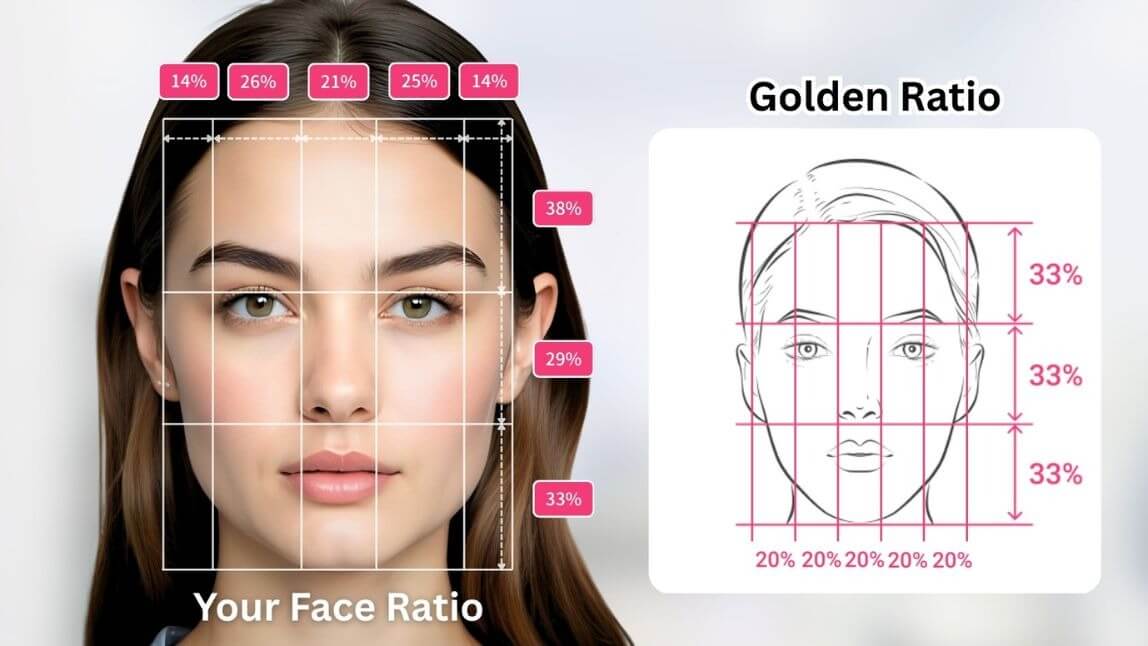
A golden ratio face uses the golden ratio, approximately 1:1.618, as one reference for comparing visible facial proportions. It can be useful for discussing facial balance, but it is not a formula for beauty or a universal standard that every face should match.
AI can make proportion analysis easier to explore from a customer-provided photo. The results should be treated as visual context—not an attractiveness score, identity assessment, medical diagnosis, or treatment recommendation.
Some images in this article may be AI-modified and are provided for illustrative purposes only. They do not represent clinical results, real-person measurements, or treatment outcomes.
What Is a Golden Ratio Face?
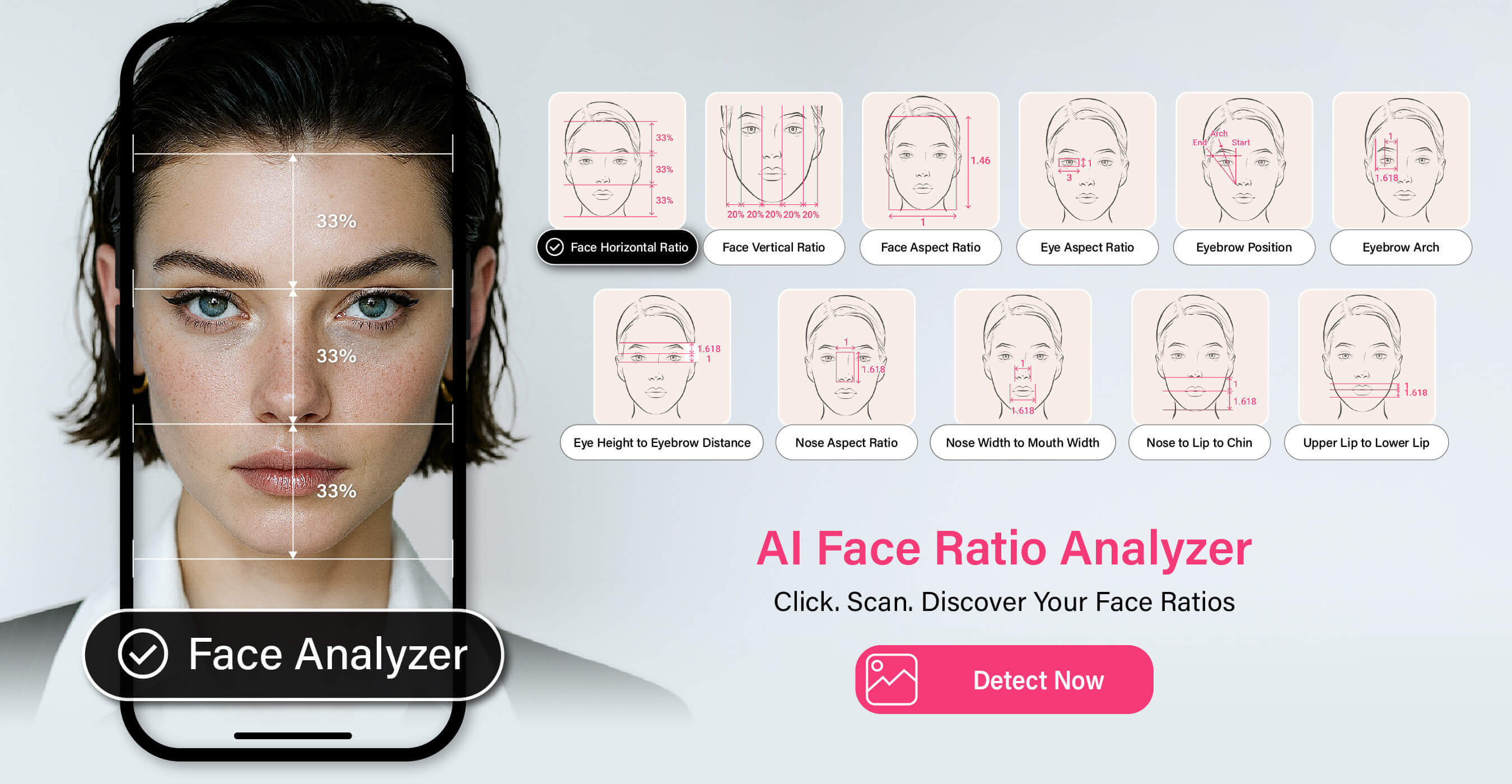
The golden ratio is approximately 1:1.618. It appears in mathematics, art, and design, and has been used as one way to explore relationships between facial distances. In facial analysis, a tool may compare measurements such as face length and width, feature spacing, facial thirds, or lower-face proportions with selected reference values.
These comparisons are descriptive rather than prescriptive. Individual features, expression, age, culture, personal preference, lighting, and photo conditions all influence how a face is perceived. No one ratio can define facial harmony or attractiveness.
Golden Ratio, Face Ratio Analysis, and Symmetry
These terms are often used together, but they describe different ways of looking at visible facial proportions.
| Approach | What It Compares | How to Use It |
|---|---|---|
| Golden ratio analysis | Selected facial distances against mathematical reference values such as 1.618 | A structured reference for exploring proportion relationships |
| Face ratio analysis | A broader set of facial dimensions, angles, and proportion relationships | A more detailed view of visible facial structure |
| Facial symmetry analysis | The relationship between the left and right sides of the face | A separate visual reference for side-to-side balance |
A face can be relatively symmetrical without matching selected golden-ratio references, and it can share some golden-ratio relationships without being perfectly symmetrical. For a deeper comparison, read our golden ratio vs. face ratio analysis guide.
What AI Golden Ratio Analysis Can and Cannot Do
A photo-based AI tool can assess visible feature relationships and facial proportions from a customer-provided image, then organize them into a visual analysis. This can help users explore ratios, facial symmetry, and related style or consultation questions without manually drawing measurement lines.
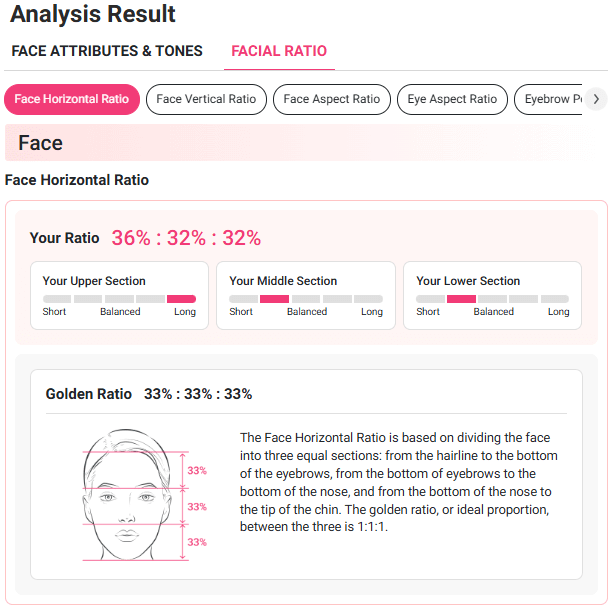
It cannot define whether someone is attractive, diagnose a medical condition, determine whether a procedure is appropriate, predict an individual outcome, or replace professional judgment. Camera angle, lighting, expression, hair, and image quality can affect any photo-based result.
Explore Perfect Corp.’s Golden Ratio Face Calculator to see how photo-based facial-proportion analysis can be presented as a visual reference.
Golden-ratio measurements are only one part of a broader facial-harmony conversation. Learn more about how visible facial attributes, proportions, and symmetry can support responsible consultation experiences in our AI facial harmony analysis guide.
How Brands Can Use Face Ratio Analysis

Brands can incorporate face-ratio analysis into web, mobile, in-store, or virtual-consultation journeys. A face-ratio API can return structured, feature-based insights that a brand connects to its own interface, recommendation logic, AR try-on, or advisor workflow.
For example, a beauty brand may use optional facial-proportion insights to guide makeup-look exploration; an eyewear retailer may connect visible proportions to frame discovery; and a hair platform may use the same experience to introduce hairstyle previews. The brand controls the customer experience and should present outputs as optional, explainable guidance.
For a closer look at implementation options, including how a Face Ratio API can support web, mobile, and in-store experiences, read what a golden ratio face analysis API measures.
Golden Ratio and Facial-Aesthetics Consultations
In aesthetic and beauty-service settings, proportion analysis can provide a shared visual reference during a consultation. It may help professionals discuss visible features, customer goals, and possible product or service categories. It should never be presented as a diagnosis, a guaranteed outcome, or a substitute for qualified professional assessment.
In aesthetic and beauty-service settings, golden-ratio comparisons may be used as one visual reference alongside a client’s goals and professional judgment. For a broader industry view, see how AI and the golden ratio are being discussed in facial aesthetics.
Golden Ratio Face FAQs
What Is the Golden Ratio for a Face?
The golden ratio is approximately 1:1.618. In facial analysis, it can be used as one reference for comparing selected visible facial distances and proportions. It is not a universal standard of beauty.
Is the Golden Ratio the Same as Facial Symmetry?
No. Golden-ratio analysis compares selected proportions between features. Facial symmetry compares the relationship between the left and right sides of the face. They can be explored together, but they measure different things.
Can AI Measure Golden-Ratio Facial Proportions?
A photo-based AI tool can assess visible feature relationships and proportion measurements from a customer-provided image. Results depend on image conditions and the tool’s method, so use them as visual guidance rather than a fixed conclusion.
Can a Golden Ratio Face Analysis Diagnose a Condition or Recommend Treatment?
No. Facial-proportion analysis is not a medical diagnosis, a treatment plan, or a predictor of individual outcomes. Speak with an appropriately qualified professional about medical or treatment-related questions.
How Can Brands Use a Face Ratio API?
Brands can connect structured facial-proportion insights to their own web, mobile, in-store, or consultation experiences. Common applications include optional product discovery, virtual try-on, educational content, and advisor-supported conversations.