 Author: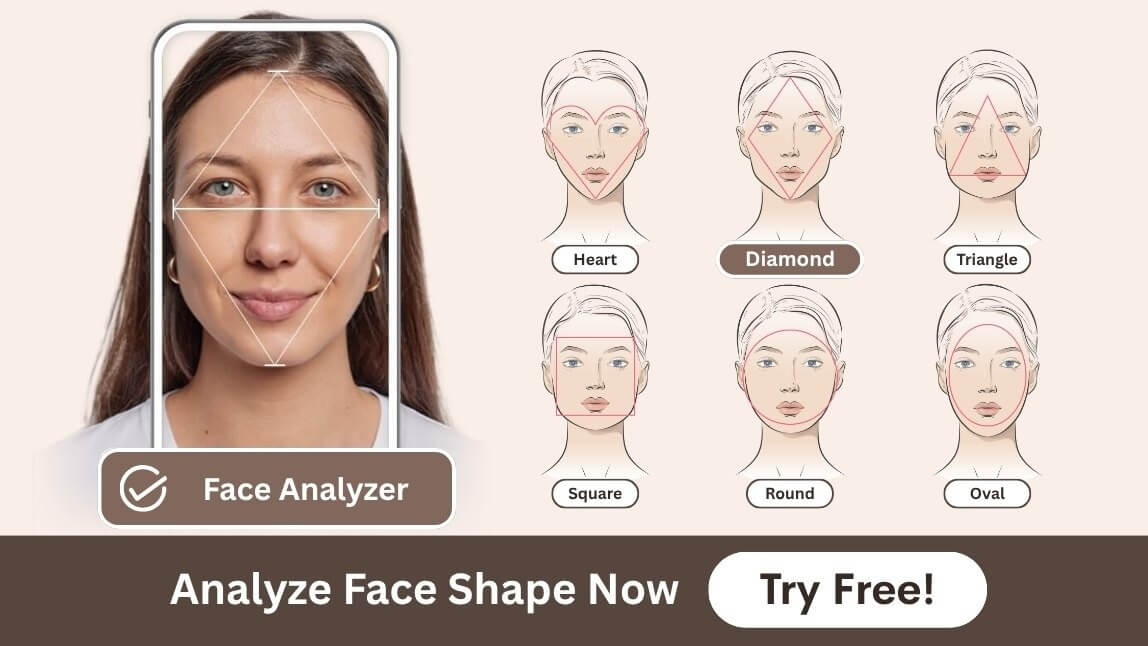
Some images in this article may be AI-generated and are used for illustrative purposes only.
A face shape filter can be a quick way to explore whether a face appears oval, round, square, heart, diamond, oblong, or another common category. But results can vary widely between an entertainment-first social filter and a dedicated AI face shape analyzer.
If you are looking for a broad face-shape overview, a manual test, or styling guidance, start with our face shape test guide . This article focuses on why photo-based results differ and how to use them more thoughtfully.
Why Face Shape Filter Results Can Differ
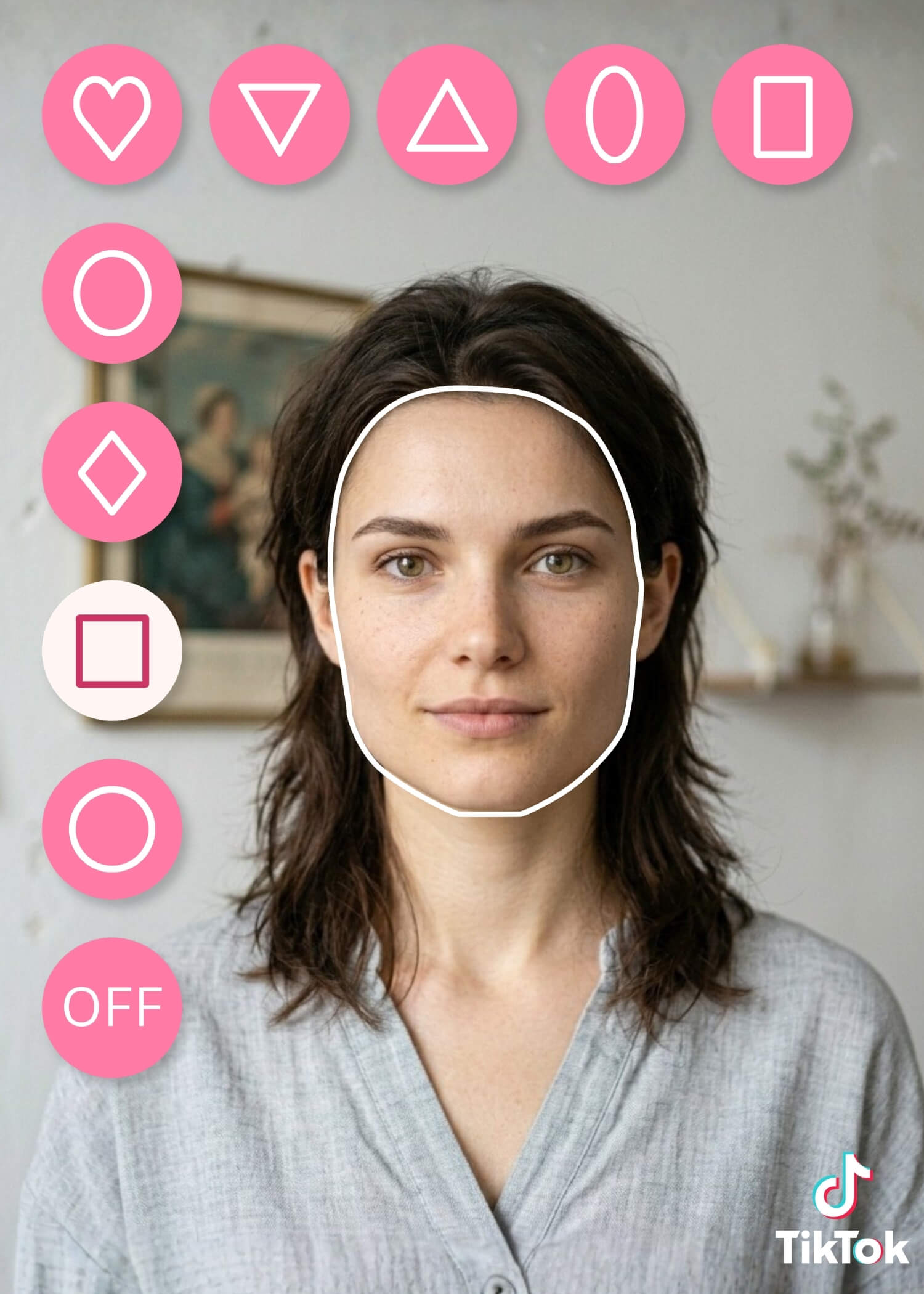
A social-media face shape filter can be useful for casual experimentation, but results may change with lighting, camera angle, expression, hair, beauty effects, and image editing. A dedicated AI face shape analyzer is designed for photo-based facial-attribute assessment and style exploration.
It may guide users toward a clear, front-facing image and connect visible face-shape insights with hairstyles, eyewear, makeup, or virtual try-on. Face-shape categories overlap naturally, and image conditions can influence any photo-based assessment.
Treat results as guidance rather than a fixed label, and compare results from clear images taken in similar conditions.
TikTok Face Shape Filter vs. AI Face Analyzer
The most useful distinction is not whether one tool is “fun” and the other is “serious.” It is whether the experience gives users clear guidance about input quality, explains what it is assessing, and provides a stable basis for the decision at hand.
| Consideration | Social-Media Filter | AI Face Analyzer |
|---|---|---|
| Primary purpose | Entertainment and shareable content | Feature-based style exploration and personalized discovery |
| Image conditions | Often used with live effects, styling, and variable lighting | Typically provides guidance for a clearer, front-facing image |
| Result context | May show a simple label with limited explanation | Can connect visible face-shape insights with product, style, or try-on exploration |
| Best use | Casual experimentation and sharing | Exploring hairstyles, eyewear, makeup, or consultation options |
What Affects Face Shape Filter Accuracy?
A face shape is based on visible proportions, including the relationship between forehead, cheekbone, and jaw widths and the overall length of the face. Several factors can change how those proportions appear in an image:
- Camera position: A level, front-facing photo generally offers a clearer reference than an extreme angle or close-up selfie.
- Lighting: Even lighting makes face edges and facial contours easier to assess than strong shadows.
- Hair and accessories: Bangs, hats, heavy styling, and glasses can obscure the hairline, temples, or jawline.
- Expression: A relaxed expression can provide a more consistent reference than a broad smile or an exaggerated pose.
- Platform effects: Beauty filters, lens effects, and image editing can change visible proportions.
- Category overlap: Many faces share characteristics across more than one common face-shape category.
How to Get a More Useful Result
Start with a clear, front-facing image at eye level. Use even lighting, keep hair away from the outer face outline where possible, and use a relaxed expression. Avoid extreme close-ups, dramatic angles, and filters that alter facial appearance.
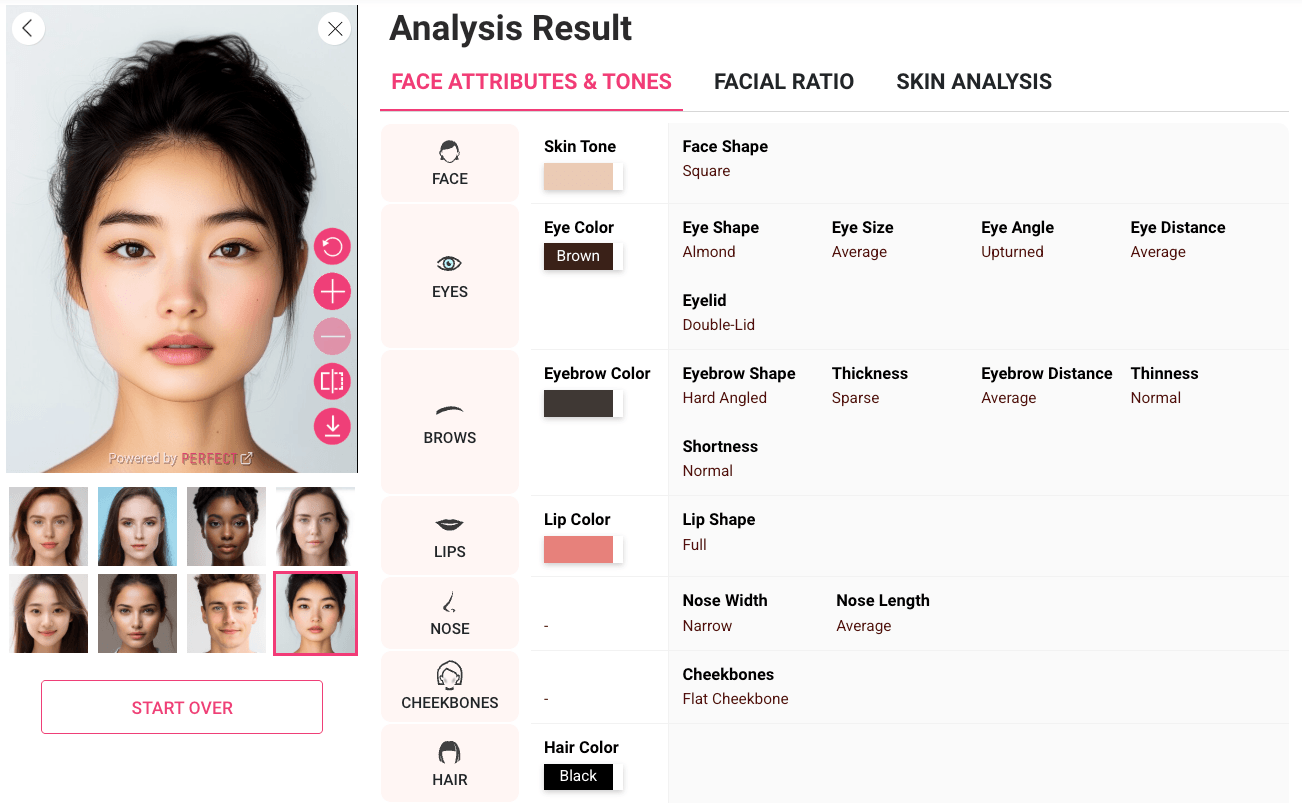
Try Perfect Corp.’s AI Face Analyzer to explore face shape and visible facial attributes from a photo. Treat the result as guidance, then compare hairstyles, eyewear, makeup, or accessories based on your own preferences.
How Brands Can Use Face Shape Analysis Responsibly
For beauty, hair, eyewear, and accessory businesses, face shape analysis can support a more useful discovery experience. A customer can optionally explore visible face-shape insights, then move to relevant product categories, virtual try-on, or an assisted consultation.
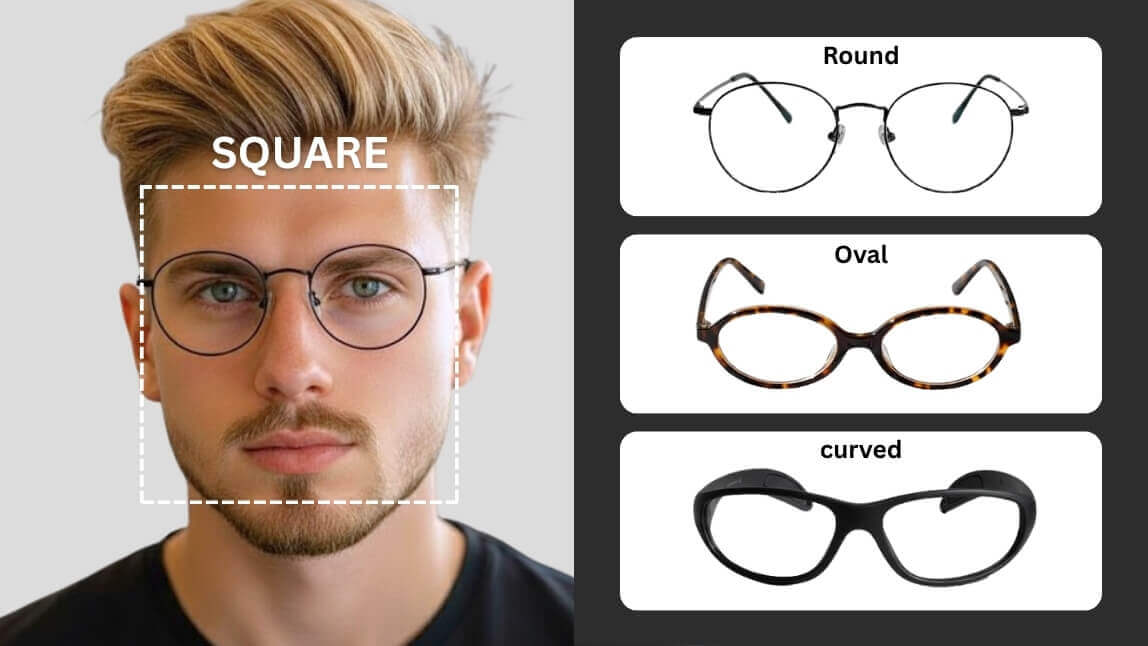
Responsible implementation means explaining what the experience assesses, providing clear photo use information, giving customers meaningful choice, and presenting results as optional visual context—not an identity match, attractiveness score, or universal style rule.
Contact Perfect Corp.’s team to discuss face analysis and virtual try-on for web, mobile, or in-store experiences.
Face Shape Filter FAQs
What Is a Face Shape Filter?
A face shape filter is a camera or photo-based tool that assesses visible facial proportions and compares them with broad face-shape categories. Some tools are designed mainly for social content, while others support style exploration or product discovery.
Is a TikTok Face Shape Filter Accurate?
A TikTok filter can be useful for casual experimentation, but results may change with lighting, angle, styling, expression, and platform effects. It should not be treated as a fixed or professional assessment.
Why Do Different Face Shape Filters Give Different Results?
Tools may use different image conditions, category definitions, and methods for assessing visible proportions. Photo angle, lighting, hair coverage, expression, editing, and natural overlap between categories can also affect the result.
Can I Find My Face Shape From a Photo?
A photo-based AI analyzer can assess visible facial proportions from a customer-provided image and provide a face-shape result. For a more useful reference, use a clear, front-facing photo with even lighting and minimal obstruction around the face outline.
Can Businesses Add Face Shape Analysis to Their Website or App?
Yes. Beauty, hair, eyewear, and accessory businesses can integrate face-analysis and virtual try-on experiences to support optional, feature-based product discovery and customer consultations.