Author: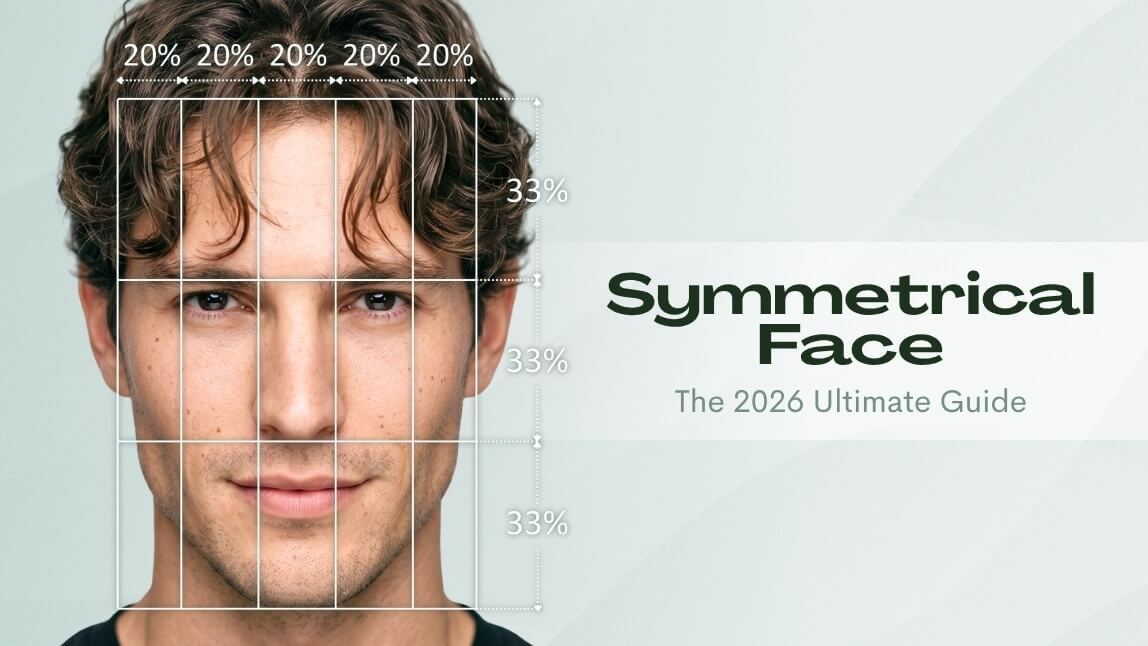
Facial symmetry is one way to describe the visible relationship between features on the left and right sides of the face. If you want a broader overview of what facial symmetry means, why mild asymmetry is normal, and how photo-based AI analysis works, start with our facial symmetry guide.
This guide focuses on the practical next step: how to assess visible symmetry using a mirror, a straight-on photo, or AI-supported analysis. It also outlines optional makeup, hairstyle, and professional consultation paths for people who want to explore visual balance.
Some images in this article may be AI-generated and are used for illustrative purposes only.
How to Assess Facial Symmetry
No at-home method can diagnose a medical condition or define whether a face is attractive. Instead, these methods provide different levels of visual reference. Lighting, camera angle, lens distortion, expression, hair, glasses, and makeup can all affect how symmetrical features appear in a photo or mirror.
The most useful approach is to treat the result as information for personal style exploration, rather than a score or a standard to meet.
Method 1: The Mirror Check
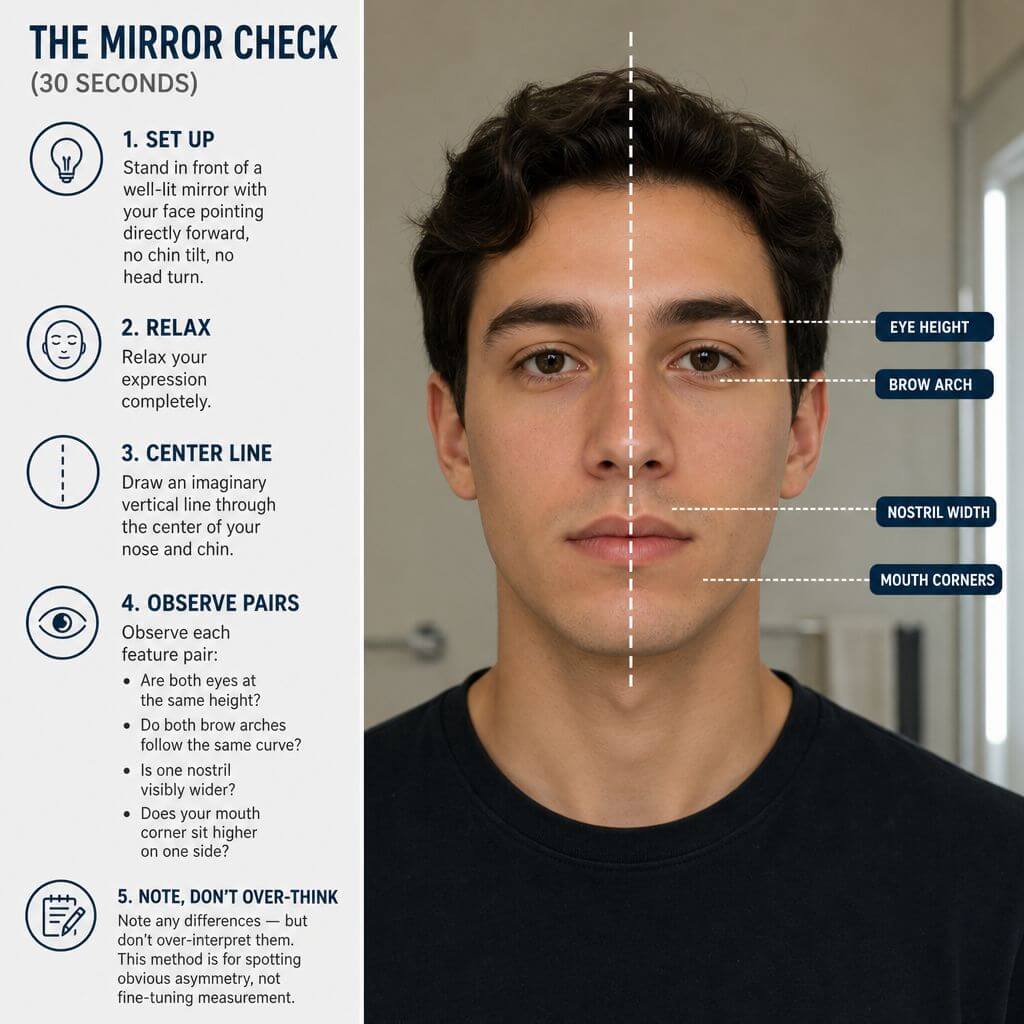
A mirror check is a quick, informal way to notice visible differences in paired features. It is useful for broad observation, but it is not a precise measurement method.
- Stand in front of a well-lit mirror with your head facing forward.
- Relax your expression and avoid tilting or turning your head.
- Imagine a vertical line running from the center of your forehead through your nose and chin.
- Observe paired features, including the eyes, brows, cheeks, mouth corners, and jawline.
- Note visible differences without over-interpreting them; small differences are common.
Method 2: Straight-On Photo Comparison
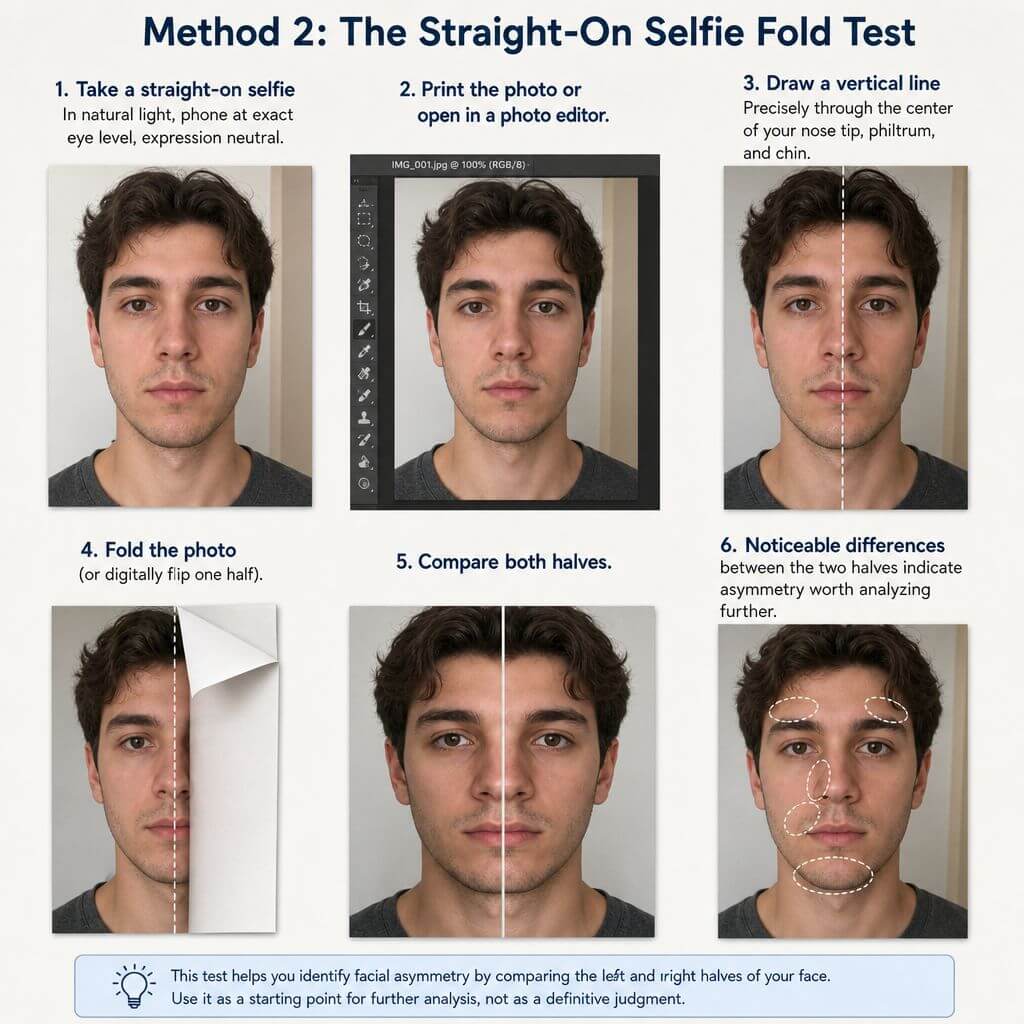
A straight-on photo provides a fixed image that can make it easier to compare visible feature relationships. It remains subjective, and photo conditions strongly influence the result.
- Use even, front-facing light and keep the camera at roughly eye level.
- Take a straight-on photo with a relaxed, neutral expression.
- Keep hair away from the face when possible and remove visual obstructions.
- Use a photo editor to add a vertical center line through the nose, philtrum, and chin.
- Compare the left and right sides as a visual exercise, not a clinical assessment.
Photo tip: Side lighting, overhead lighting, wide-angle lenses, and head tilt can exaggerate or create the appearance of unevenness. Use even front-facing light whenever possible.
Method 3: AI Face Symmetry Analysis
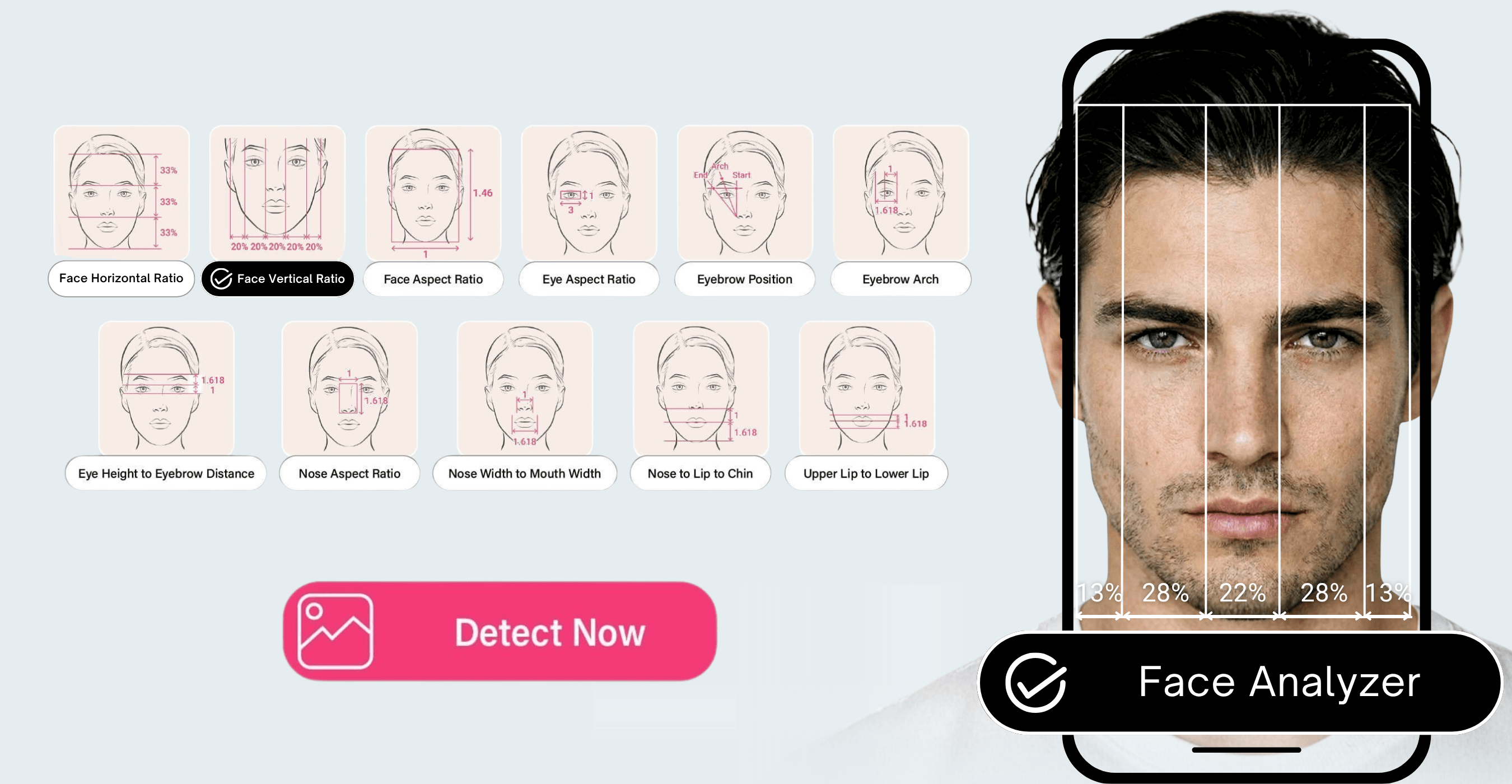
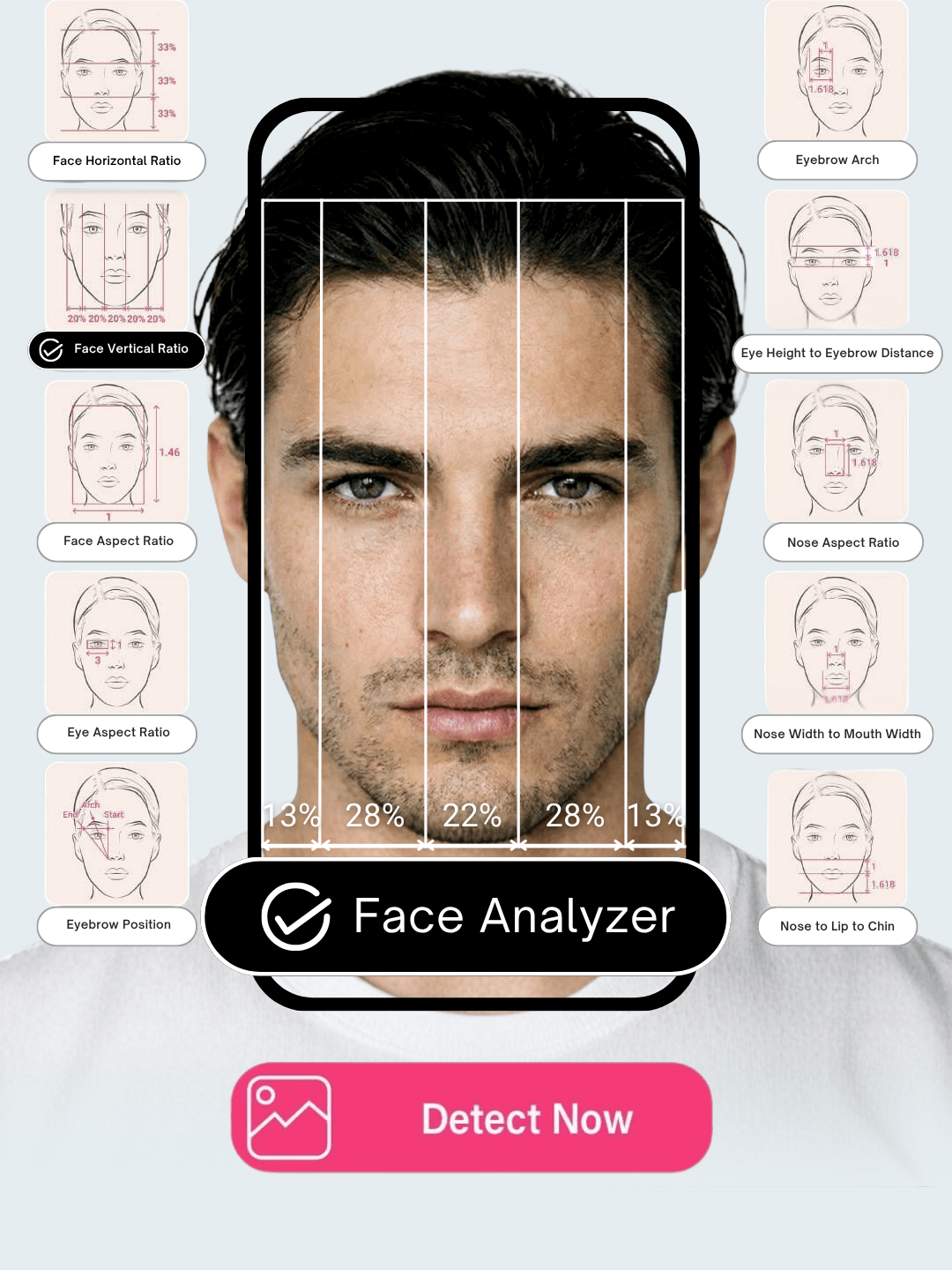
A photo-based AI tool can organize visible facial feature relationships into a structured analysis. This can be helpful when you want a consistent visual reference before exploring makeup, hairstyles, eyewear, or virtual try-on experiences.
- Visit the AI Face Symmetry Checker.
- Choose a clear, front-facing image with even lighting and a relaxed expression.
- Follow the tool’s upload and analysis steps.
- Review the visible feature and proportion information as descriptive visual context.
- Use the result to compare optional styling choices rather than to judge your appearance.
AI analysis is not a medical examination and should not be used to diagnose an injury, dental issue, neurological symptom, or other health condition.
How to Interpret Facial Symmetry Results
Nearly every face has some amount of asymmetry. One brow may sit slightly higher, one eye may open differently, or one side of the mouth may move more during expression. These differences are common and can contribute to individuality.
For a more detailed discussion of common types and causes of facial asymmetry, read our asymmetrical face guide.
A sudden facial change, especially when paired with drooping, weakness, numbness, speech difficulty, severe headache, or vision changes, requires prompt medical attention. Do not rely on a photo or AI analysis in that situation.
7 Options for Exploring Visible Balance
The following options range from temporary styling choices to professional consultations. The appropriate path depends on your goal, comfort level, and whether you have a health, dental, or structural concern. No option is necessary simply because a face has natural asymmetry.
1. Consistent Photo Conditions
Before comparing photos over time, use similar lighting, distance, expression, and camera angle. Consistent conditions make visual comparisons more meaningful and reduce the chance that shadows or lens distortion are driving perceived differences.
2. Makeup Exploration
Makeup can be used to experiment with brow definition, blush placement, contour, highlight, and lip shape. Virtual try-on gives users an opportunity to compare looks without making a permanent change.
3. Hairstyle Exploration
Hair parting, fringe, layers, and volume can change how a face is framed in photos and in person. A virtual hairstyle tool can help users compare options based on personal preference.
4. Eyewear and Accessory Comparison
Frame shape, size, color, and placement can create different visual effects. Virtual accessory try-on can help users compare styles before purchasing.
5. Consultation With a Beauty Professional
A makeup artist, hairstylist, or eyewear advisor can offer personalized, preference-led styling suggestions. Bring reference photos or virtual try-on results to make the conversation more specific.
6. Dental or Orthodontic Evaluation
If a change in facial appearance seems related to bite alignment, jaw discomfort, missing teeth, or dental concerns, a dentist or orthodontic professional can assess the underlying issue. They can explain whether treatment is appropriate for function and oral health.
7. Licensed Medical Consultation
For concerns related to injury, sudden changes, facial movement, or a potential structural issue, consult an appropriately qualified medical professional. They can evaluate the cause, discuss risks and benefits, and determine whether any treatment is medically appropriate.
Frequently Asked Questions
How can I check if my face is symmetrical?
You can begin with a mirror check or a clear, straight-on photo comparison. A photo-based AI tool can provide a more structured visual reference, but results remain dependent on image quality, lighting, camera angle, and expression.
Is facial asymmetry normal?
Yes. Small differences between the two sides of the face are common. Learn more about normal variation, possible causes, and styling exploration in our asymmetrical face guide.
Can makeup make a face look more balanced?
Makeup can create different visual effects through optional brow definition, blush placement, contour, highlight, and lip looks. The result is personal and temporary, making virtual try-on a useful way to compare styles.
Can facial exercises change face symmetry?
There is limited evidence that facial exercises can meaningfully change facial structure. If you have concerns about facial movement, jaw function, pain, or a noticeable change in appearance, speak with an appropriately qualified healthcare professional.
When should I seek medical advice for facial asymmetry?
Seek prompt medical attention for sudden facial asymmetry, especially if it is accompanied by facial drooping, weakness, numbness, speech difficulty, severe headache, or vision changes.