 Author: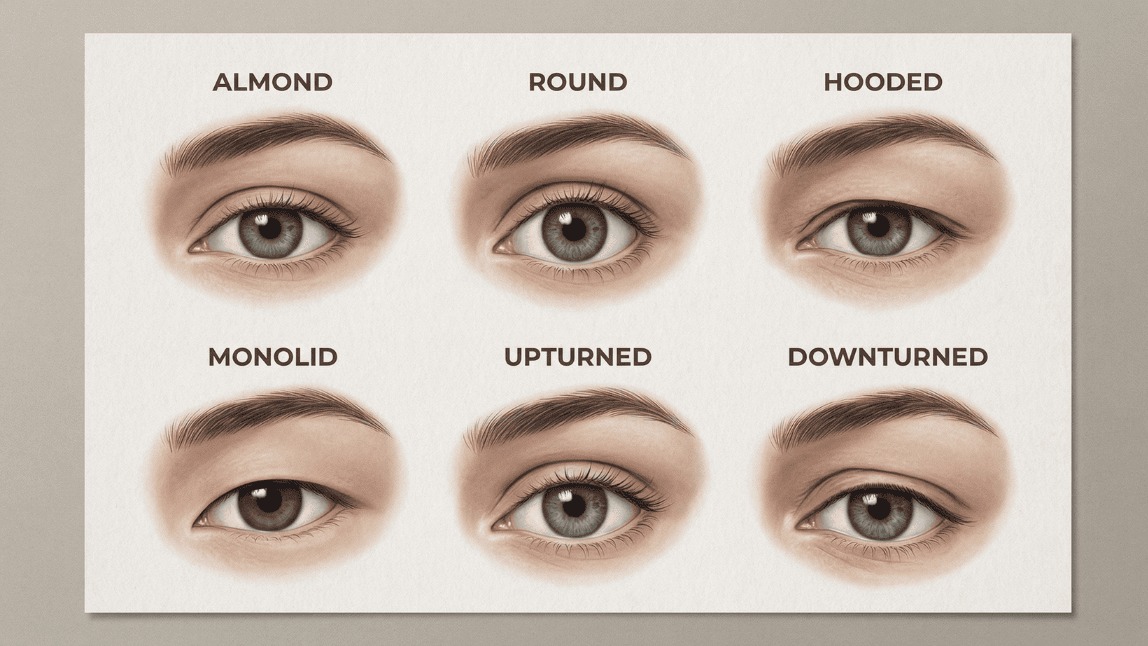
| Key Takeaway |
|---|
| This article serves as the definitive guide to understanding different eye shapes, their characteristics, and how to identify them using both traditional methods and cutting-edge AI technology. It explores the significance of knowing one's eye shape for beauty, eyewear, and personal style, demonstrating how the latest AI solutions offer hyper-accurate analysis and personalized recommendations. |
Ever looked in the mirror and wondered, 'What eye shape do I have?' You're not alone! Our eyes are the windows to our soul, and understanding their unique architecture – the different types of eye shapes – is the first step to unlocking your most captivating gaze. This ultimate guide will demystify the fascinating world of different types of eyes, help you confidently identify your own, and even reveal how cutting-edge AI is revolutionizing personalized beauty by acting as your ultimate eye shape detector!
Key Takeaways: Your Ultimate Guide to Eye Shapes
- What Are Eye Shapes and Why Do They Matter?
- The Ultimate Eye Shape Chart: Identifying Your Unique Look
- How to Determine Your Eye Shape Like a Pro (DIY Test)
- Beyond the Basics: Understanding Eyelid Types and Features
- The Science Behind Eye Shape Detection: How AI Analyzes Your Gaze
- The Transformative Benefits of Knowing Your Eye Shape
- Future of Eye Shape Analysis: Personalization on Steroids
- Frequently Asked Questions About Eye Shapes

What Are Eye Shapes and Why Do They Matter?
Your eye shape isn't just a random genetic lottery; it's a defining feature that profoundly influences your facial aesthetics and how makeup, eyewear, and even hairstyles interact with your face.
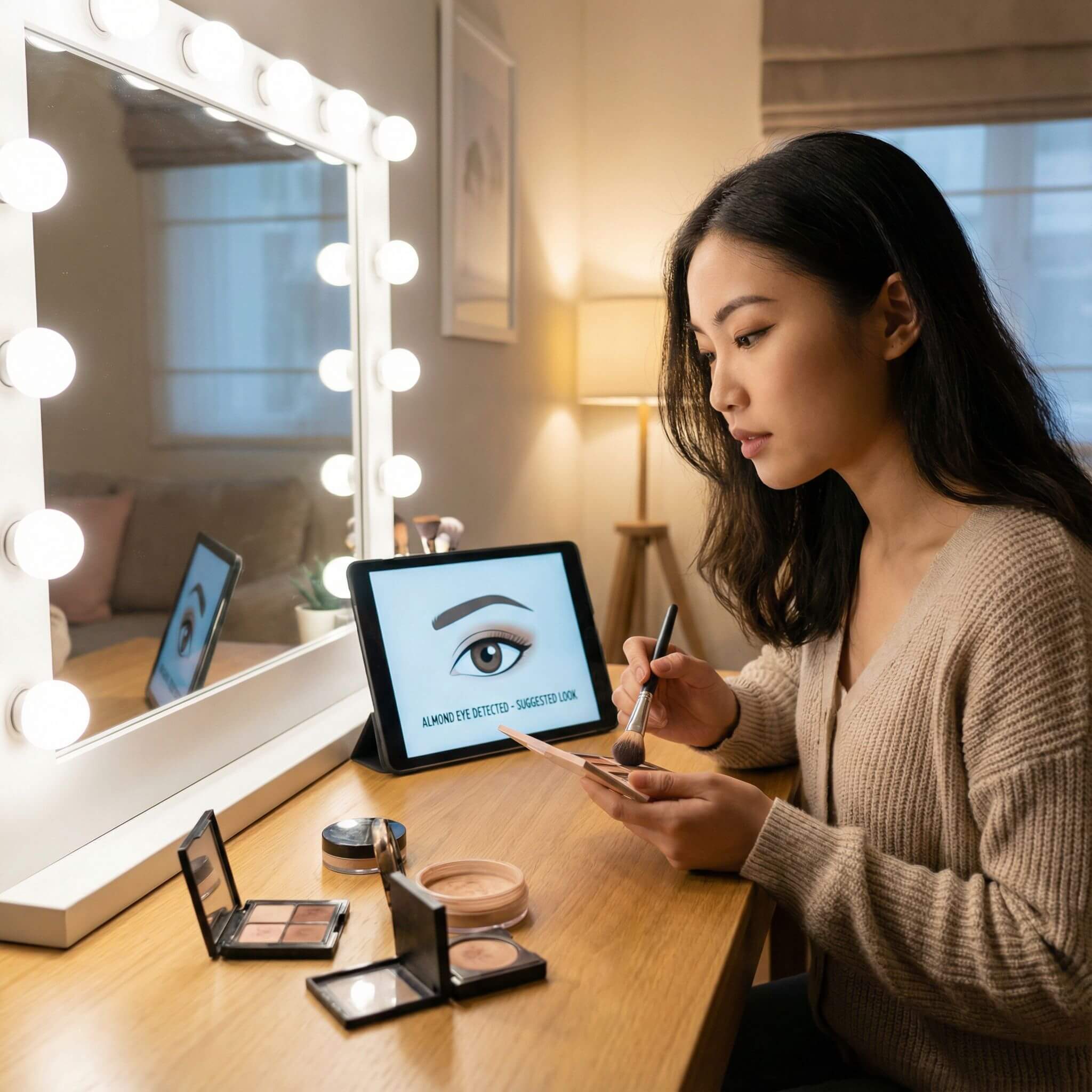
Understanding the different types of eye shapes isn't merely a fun fact; it's a powerful tool for self-expression and personalized beauty. When you know your specific eye shape type, you can:
- Master Makeup Application: No more struggling with makeup tutorials designed for a different eye shape! Learn techniques that truly enhance your unique features.
- Choose Flattering Eyewear: Glasses and sunglasses can transform your look. The right frame complements your eye shape, while the wrong one can throw off your entire face.
- Boost Confidence: Self-awareness of your unique beauty leads to greater confidence and a more authentic personal style.
- Navigate Beauty Trends: Adapt trends to suit you, rather than blindly following them.
From the sultry allure of an almond shape eyes to the wide-eyed wonder of a round gaze, every eye shape tells a story. Let's embark on a journey to decode yours!
The Ultimate Eye Shape Chart: Identifying Your Unique Look
Ready to finally answer 'What kind of eyes do I have?' Get ready for the most comprehensive eye shape chart you'll find! We'll break down the most common types of eye shapes and their tell-tale characteristics. Grab a mirror and let's go!
Almond Eyes
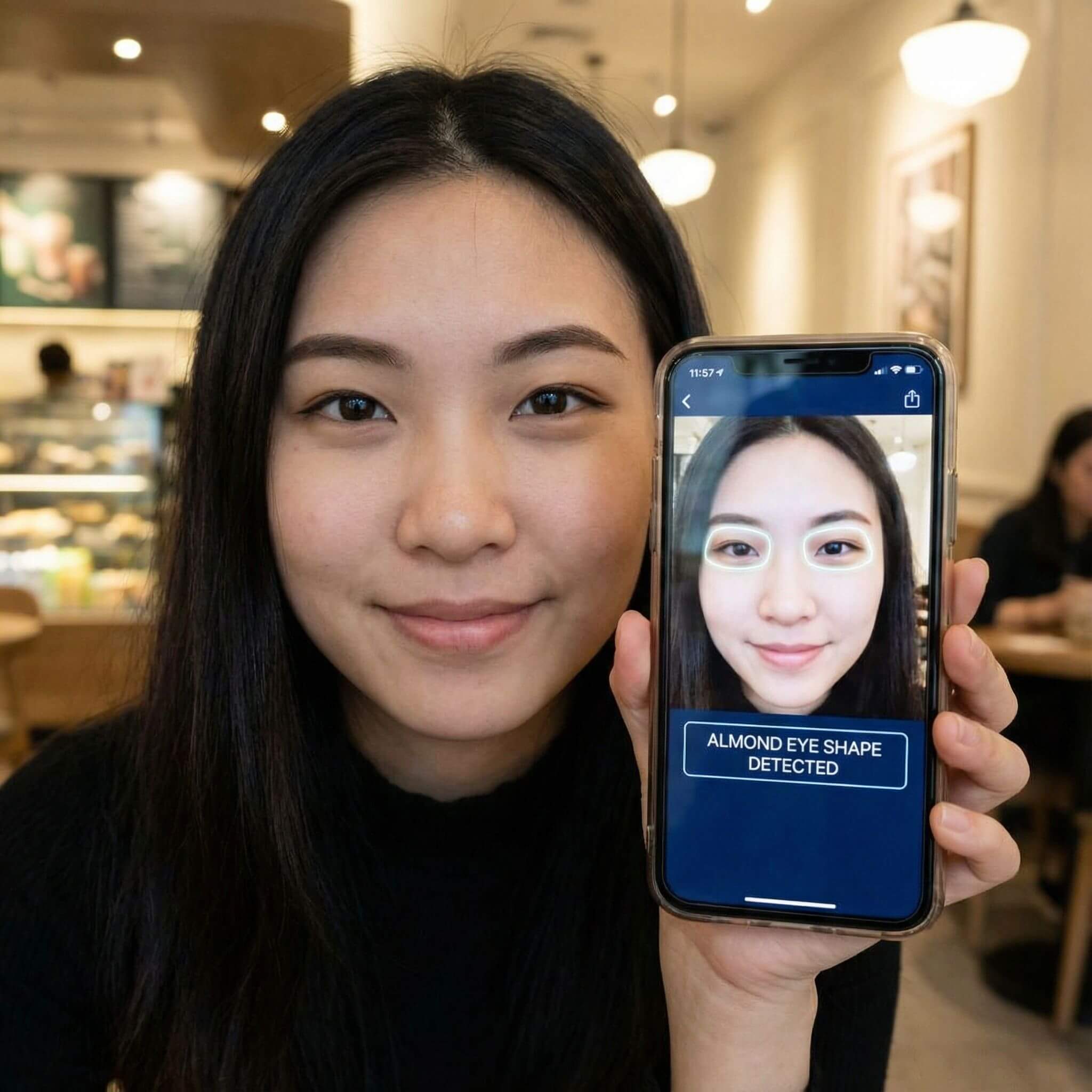
Considered by many as the most versatile and 'ideal' eye shape, almond shape eyes are characterized by an oval shape that tapers to a slight point at both the inner and outer corners. The key indicator? The iris (the colored part of your eye) touches both the top and bottom of the eyelid. You'll often notice a visible crease. If you've been wondering, 'Do I have almond eyes?' and your eyes fit this description, congratulations – you've got a classic!
- Characteristics: Slightly upturned outer corners, balanced proportions, visible eyelid crease.
- Makeup Tip: Almost any makeup style works, from dramatic wings to smoky eyes.
Round Eyes

If your eyes appear large and open, and you can see a significant amount of white above and/or below your iris when you look straight ahead, you likely have round eye shape. These eyes tend to look more circular than oval. If you've been asked 'Are my eyes big?' or 'Do I have doe eyes?', you might have beautiful round eyes!
- Characteristics: Visible white around the iris, prominent and open appearance, often a distinct eyelid crease.
- Makeup Tip: Focus on elongating the eye with winged liner or smudged shadow on the outer corners.
Monolid Eyes

Monolid eyes lack a visible crease in the eyelid, creating a smooth, flat surface from the lash line to the brow bone. This doesn't mean there's no crease; it simply means the crease is hidden or very close to the lash line.
- Characteristics: No visible eyelid crease, flatter appearance, often a less defined brow bone.
- Makeup Tip: Experiment with floating liner, smudged eyeliner at the lash line, and bold colors.
Hooded Eyes

A very common eye shape, hooded eyes occur when excess skin from the brow bone folds over the eyelid, 'hooding' or partially obscuring the crease and sometimes even the lash line. This can make the eyelid appear smaller or less visible when the eye is open. Many people, including celebrities, have beautiful hooded eyes, sometimes referred to as 'hooded almond eyes' if they also have an almond shape underneath the hood.
- Characteristics: Skin folds over the crease, making the movable lid less visible.
- Makeup Tip: Focus on defining the lash line, creating an 'invisible' liner, and extending shadow above the natural crease.
Downturned Eyes

For those with downturned eye shape, the outer corners of the eyes point slightly downward, giving a gentle, often soft or melancholic appearance. Imagine drawing a straight line across the center of your eye – if the outer corner falls below this line, you likely have downturned eyes.
- Characteristics: Outer corners dip below the inner corners, creating a sweet, expressive look.
- Makeup Tip: Use uplifting techniques like winged liner angled upwards to create a lift.
Upturned Eyes

The opposite of downturned, upturned eyes feature outer corners that lift upwards, creating an exotic and often feline-like appearance. If a straight line across your eye's center has the outer corner rising above it, you've got upturned eyes. They often resemble a subtle almond shape, but with a more pronounced lift.
- Characteristics: Outer corners rise above the inner corners, creating an 'uplifted' effect.
- Makeup Tip: This versatile shape can handle most styles, but a soft smoky eye or extended liner can enhance the natural lift.
Protruding Eyes

Protruding eyes, also known as prominent eyes, appear to project outward from the eye socket, giving them a more 'popped' or 'bulging' look. They often have a lot of visible white around the iris and a deep crease.
- Characteristics: Eyes appear to stand out from the face, often large with a visible orbital bone.
- Makeup Tip: Use darker shadows on the lid to recede the area and minimize prominence.
Deep-Set Eyes

Deep-set eyes appear set further back into the skull, giving the brow bone a more prominent or pronounced appearance. This can create natural shadows under the brow. If your eyes seem to recede into your face, you likely have this shape.
- Characteristics: Eyes are recessed, brow bone appears more prominent, can create natural shadows.
- Makeup Tip: Focus on brightening the eyelid with lighter shadows and shimmer to bring the eyes forward.
How to Determine Your Eye Shape Like a Pro (DIY Test)
Ready to conduct your own personal 'eye shape test'? Follow these simple steps to figure out 'how to know your eye shape' and 'what type of eye shape do I have' right now! All you need is a mirror and good lighting.
- Look Straight Ahead: Stand directly in front of a mirror, looking straight into your own eyes. Relax your face.
- Examine Your Crease:
- Visible Crease: Do you see a fold in the skin above your upper lash line? Most people do. This is your eyelid crease.
- No Visible Crease (Monolid): If your lid appears smooth and flat from lash line to brow, you likely have monolid eyes.
- Hidden Crease (Hooded): Does the skin from your brow bone droop over, partially or fully obscuring your crease when your eyes are open? You might have hooded eyes.
- Check for White Around Your Iris:
- No White Above or Below (Almond): If your iris touches both the top and bottom lash lines (or very close to them), you might have almond eyes.
- White Above and/or Below (Round): If you can see a significant amount of white above and/or below your iris, your eyes are likely round.
- Draw an Imaginary Line: Mentally (or with a ruler if you're serious!) draw a straight horizontal line across the center of your eye, passing through your pupil.
- Outer Corner Above Line (Upturned): If your outer corner lifts above this line, your eyes are upturned.
- Outer Corner Below Line (Downturned): If your outer corner dips below this line, your eyes are downturned.
- Observe Overall Prominence:
- Eyes Recede (Deep-Set): Do your eyes seem to sit further back, with a prominent brow bone?
- Eyes Project (Protruding): Do your eyes appear to 'pop' or stand out from your face?
Combine these observations to pinpoint your unique combination of different kinds of eyes. It’s a fun way to learn 'how to figure out your eye shape'!
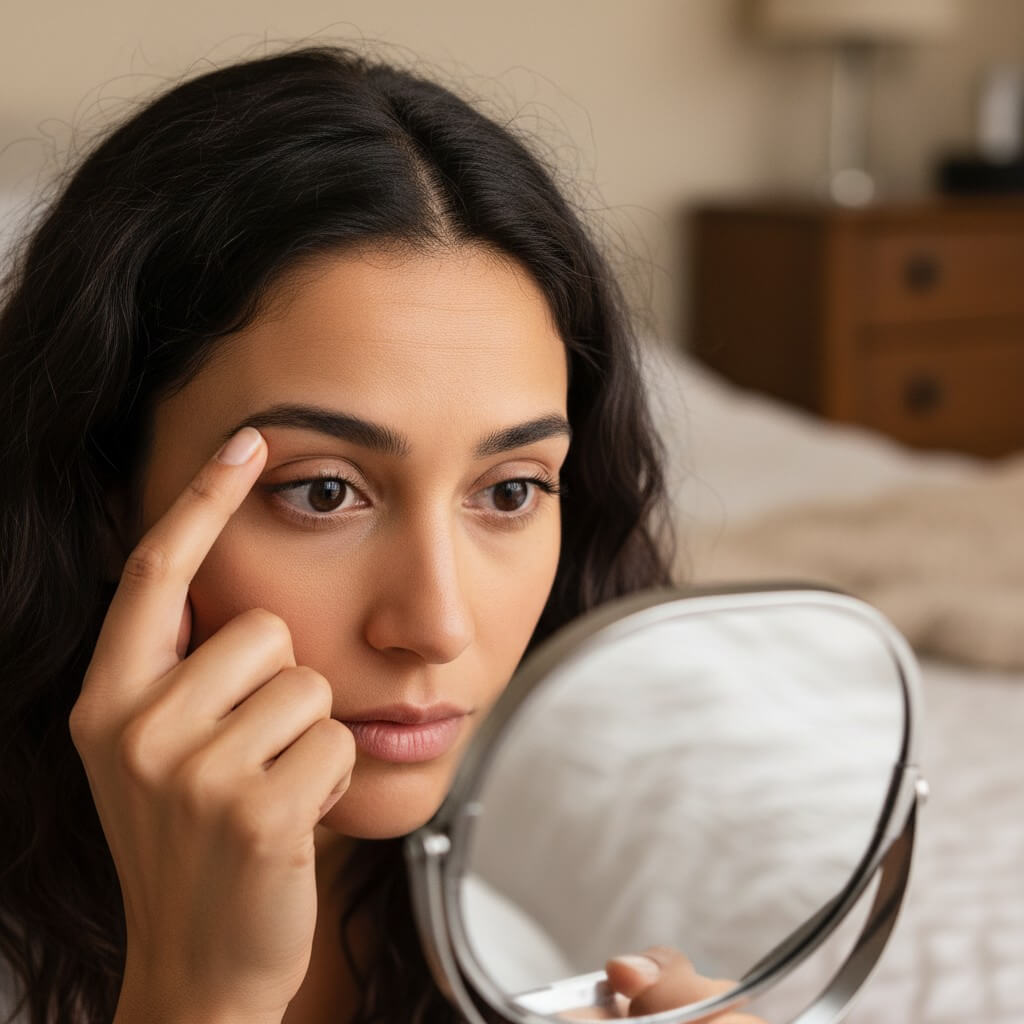
Beyond the Basics: Understanding Eyelid Types and Features
While the overall shape is crucial, understanding your eyelid structure adds another layer to 'what eyelids do I have' and how to maximize your look. These are often intertwined with eye shape:
- Crease vs. No Crease: As discussed, a visible crease is common (double eyelid), while a hidden or absent crease (monolid) is distinct.
- Epicanthic Fold: An epicanthic fold is a skin fold of the upper eyelid that covers the inner corner of the eye. It's common in East Asian eyes but can be present in varying degrees across different ethnicities.
- Asymmetry: It's perfectly normal for your eyes to have slight differences. Embrace the unique character this brings!
The Science Behind Eye Shape Detection: How AI Analyzes Your Gaze
Forget the guesswork and 'eye shape quiz' that only give you an approximation! In today's digital age, the question 'What eye shape do I have?' can be answered with unparalleled precision thanks to advanced Artificial Intelligence. Perfect Corp.'s groundbreaking AI Face Analyzer technology, for instance, isn't just about fun filters; it's a sophisticated engine that acts as your personal eye shape detector, eye shape analyzer, and even an 'eye shape scanner' all rolled into one.
So, 'how does AI accurately detect eye shape?' It's fascinating! Our AI leverages deep learning algorithms trained on massive datasets of diverse human faces. When you use an AI-powered tool (like a 'what type of eyes do I have scan' or 'what is my eye shape camera' feature), the technology performs several complex steps:
- Facial Features Detection: The AI first analyzes 'facial features' – key points around your eyes, nose, mouth, and jawline. For eyes, this includes the inner and outer corners, the curve of the lash line, and the contours of the eyelid crease.
- Geometric Analysis: Based on these analysis, the AI measures angles, distances, and ratios – for example, the angle of your outer corner relative to your inner corner, the visibility of your iris, and the presence and characteristics of your eyelid crease. This is far more precise than any 'eye shape calculator' you've seen before!
- Classification: These measurements are then fed into a trained machine learning model, which classifies your eyes into one of the recognized eye shape types (almond, round, hooded, downturned, monolid, etc.) with incredible accuracy.
- Real-time Adaptability: Perfect Corp.'s AI is not static. It can analyze your eyes in real-time, adapting to different lighting conditions, head poses, and even subtle facial expressions, providing consistent results.
This sophisticated 'eye shape AI' goes beyond simple categories, often providing a nuanced understanding of your eye's unique characteristics, making it an invaluable tool for both consumers and brands.
Ready to experience the precision of AI eye shape analysis for your brand or personal journey? Explore Perfect Corp.'s cutting-edge AI solutions!
Discover AI Face Analysis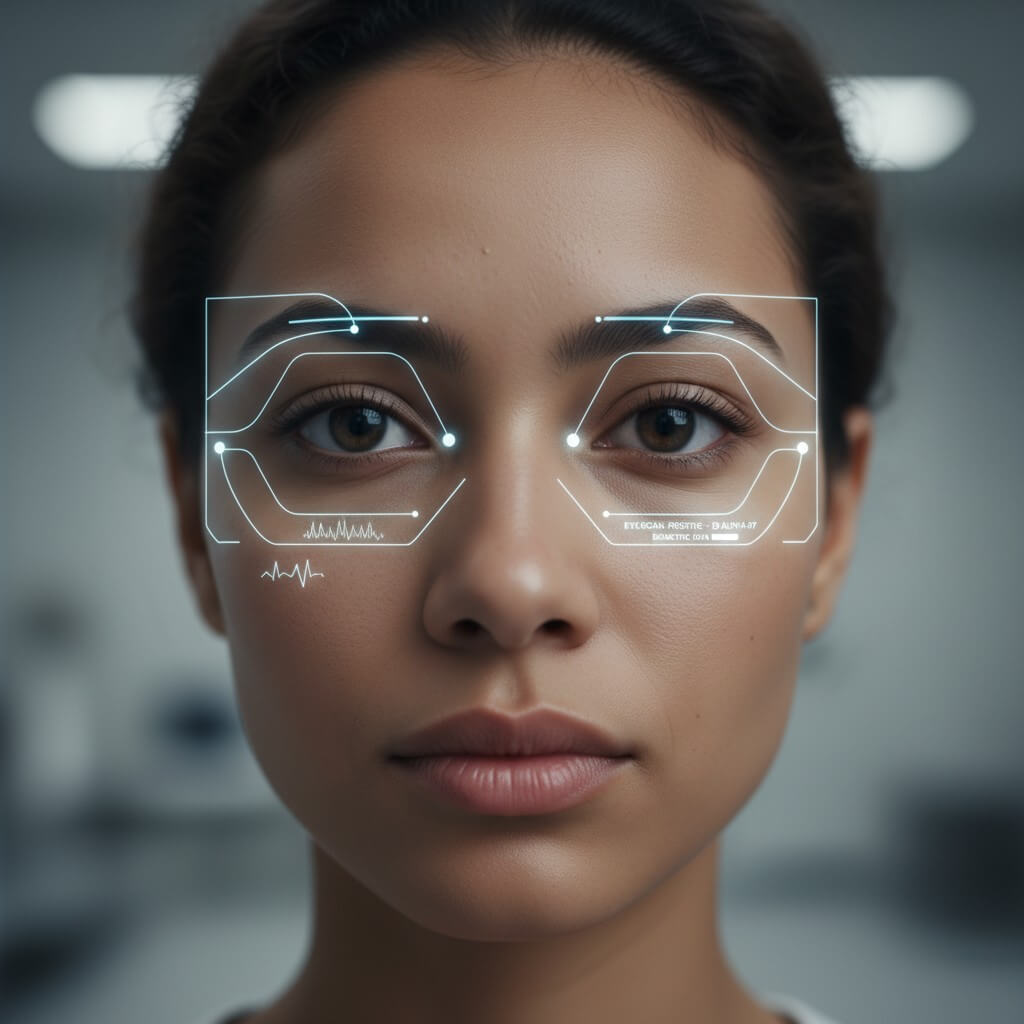
The Transformative Benefits of Knowing Your Eye Shape

For Consumers: Confidence, Clarity, and Customization
- Unleash Your Inner Makeup Artist: Master techniques specific to your different types of eye shapes, from lifting downturned eyes to opening up hooded ones.
- Flawless Eyewear Choices: Say goodbye to ill-fitting frames! Select glasses that perfectly complement your facial structure and eye shape.
- Efficient Shopping: Reduce time and effort spent on returns by making informed purchasing decisions for beauty products and accessories.
- Self-Discovery & Empowerment: Gain a deeper appreciation for your unique features and express yourself with greater confidence.
- Trend Adaptability: Learn how to adapt 'viral' trends to suit your specific features, rather than feeling left out.
For Brands & Retailers: Engagement, Sales, and Loyalty
- Enhanced Customer Experience: Offer hyper-personalized consultations and product recommendations that delight customers and build trust.
- Increased Conversion Rates: When customers find products that truly suit them, they are more likely to make a purchase.
- Reduced Returns: Accurate virtual try-on and recommendations lead to fewer product mismatches and returns.
- Data-Driven Insights: Understand customer preferences based on eye shape data, enabling better product development and marketing strategies.
- Competitive Edge: Differentiate your brand by offering cutting-edge AI tools that provide a superior, futuristic shopping experience.
Future of Eye Shape Analysis: Personalization on Steroids
The journey of eye shape analysis is just beginning. Imagine a future where your personal AI assistant not only knows your eye shape but also understands your mood, the occasion, and even the weather, dynamically suggesting makeup looks or eyewear styles in real-time. We're talking about:
- Dynamic Styling: AI will evolve beyond static recommendations, offering adaptive styling that changes with your expression or activity.
- Augmented Reality Integration: Seamless integration of AI eye analysis with AR will create hyper-realistic virtual try-on experiences for everything from contact lenses to colored eyeliner.
- Holistic Beauty & Wellness: Eye shape insights could link to overall facial symmetry, posture, and even wellness recommendations, creating a truly holistic personalized experience.
The possibilities are as boundless as your gaze!
Ready to integrate AI eye shape analysis into your business? Unlock the future of personalized beauty with Perfect Corp.'s comprehensive AI solutions!
Explore Perfect Corp. SolutionsFrequently Asked Questions About Eye Shapes
Q1: What is the most common eye shape?
While exact statistics vary by region and ethnicity, almond shape eyes are widely considered the most common eye shape globally due to their balanced proportions and versatility. Many other eye shapes, such as downturned or upturned, can also be variations of the almond shape.
Q2: Is there a "most beautiful" eye shape?
Absolutely not! The concept of the 'most beautiful eye shape' is entirely subjective and culturally influenced. Every eye shape possesses its own unique charm and beauty. What truly makes eyes beautiful is their expression and how they're cared for. AI helps you discover and enhance your natural beauty, whatever your unique types of eyes are.
Q3: Can my eye shape change over time?
While your fundamental bone structure and genetic eye shape remain constant, certain factors can subtly alter the appearance of your eye shape over time. Aging can lead to a loss of skin elasticity, potentially causing a more hooded or downturned appearance. Swelling, weight changes, and even certain medical conditions can also temporarily affect how your eyes look.
Q4: How does AI accurately detect eye shape?
AI technology, like Perfect Corp.'s AI Face Analyzer, detects eye shapes by utilizing advanced facial landmark detection and deep learning algorithms. It identifies key points around the eye, measures angles, curves, and distances, and then classifies the eye based on these precise geometric calculations. This process is far more objective and accurate than manual assessment, providing a reliable 'eye shape detector' or 'eye shape scanner'.
Q5: What is the difference between hooded and monolid eyes?
The main difference lies in the eyelid crease. Monolid eyes lack a visible crease, creating a smooth, uninterrupted lid. Hooded eyes, conversely, do have a crease, but it's obscured or 'hooded' by an extra fold of skin from the brow bone that hangs over it when the eye is open. Both are distinct and beautiful different types of eye shapes.
Q6: Can knowing my eye shape help with makeup application?
Yes, absolutely! Knowing 'what eye shape do I have' is one of the most crucial pieces of information for effective makeup application. It allows you to tailor techniques – like where to apply eyeshadow, how to draw eyeliner, or how to shape your brows – to enhance your specific features, creating more flattering and impactful looks. It transforms your makeup routine from guesswork to precision.
Q7: What are doe eyes?
'Doe eyes' is a descriptive term often used for a specific look rather than a strict eye shape. It typically refers to large, wide, innocent-looking eyes, often associated with a round eye shape, where the iris appears prominent and a good amount of white is visible around it, similar to the gentle eyes of a deer or 'doe'.
Q8: How can I use an "eye shape app" or "eye shape generator"?
An 'eye shape app' or 'eye shape generator' often utilizes AI technology to analyze your uploaded photo or real-time camera feed. These tools function as a virtual 'eye shape test photo' or 'eye shape finder camera app', automatically detecting your eye shape and sometimes offering virtual try-ons for makeup, hairstyles, or eyewear. They provide a quick and interactive way to answer 'what type of eyes do I have quiz' with visual results.
Q9: Are there cultural differences in perceiving eye shapes?
Yes, beauty standards and perceptions of eye shapes can vary significantly across cultures. What is considered 'ideal' or 'beautiful' in one culture might differ in another. However, the objective classification of different types of eye shapes (like almond, round, monolid) remains consistent, allowing AI to provide universally applicable analysis while acknowledging diverse aesthetic preferences.
Q10: What is the rarest eye shape?
While difficult to definitively state due to the vast spectrum of human diversity, unusually large or small eyes, or eyes with very pronounced features (like extremely deep-set or protruding eyes) are generally less common than the more balanced almond shape eyes or typical round eye shape. However, every eye shape is unique and beautiful in its own right, making 'rarest eye shape' a less meaningful pursuit than appreciating individual beauty.

This article was edited and reviewed by the Perfect Corp. editorial team.
Welcome to contact us or give us more suggestions.